
• MyOxy
  • Offices & Services
  • Alumni
  • Newsroom
  • Calendars

Occidental College

Our StoryAdmission & AidAcademicsLife at OxyLos AngelesOxy VoicesGivingGo Tigers!

Vantuna Research Group

  • Vantuna Research Group
  • Current Research
  • Rocky Reef Ecology

Rocky Reef Ecology

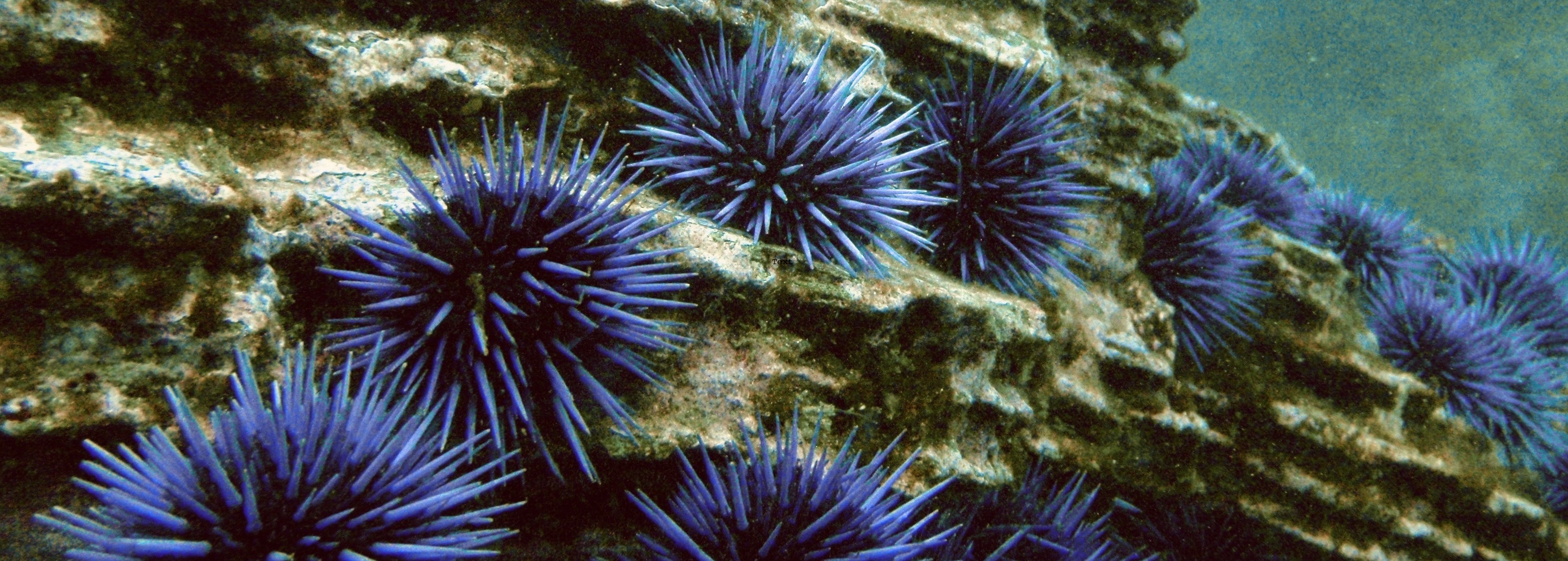
Heavily eroded reef and purple urchins.

The Vantuna Research Group performs studies of the rocky reef ecology of Southern and Baja California using a variety of different methods. Diver transects and ichthyoplankton studies are an integral part of VRG research and are among the longest continuous studies of reef fishes in the world.


Current projects include: 
  • The Ecosystem Impacts of Kelp Forest Habitat Restoration, Including Important Fishery Species
  • Kelp and Shallow-Reef Ecosystems Baseline Data and Long-Term Trends Using Historical Data for the South Coast 
  • Ichthyoplankton of King Harbor, Redondo Beach, California
  • Long-term Monitoring of Reef Fishes at Rocky Point, Palos Verdes, and King Harbor, Redondo Beach, California


Past projects:
  • Monitoring and Research of the Rocky Reef Resources in Santa Monica Bay
  • Rocky Reef Resources of the Port of Los Angeles
  • Bight ’08 – Rocky Reefs
  • Fish and Invertebrate Surveys of Rocky Reefs in the Southern California Bight in accord with the Marine Life Management Act


The Ecosystem Impacts of Kelp Forest Habitat Restoration, Including Important Fishery Species

(Funded by USC SeaGrant)

Kelp forest ecosystems are iconic and productive features along the coast of California with services that span a wide array of consumptive and non-consumptive uses. Predation by red and purple urchins will aggregate in fronts and clear expanses of kelp forest if left unchecked, leaving reefs devoid of macroalgae (urchin barrens). Kelp restoration efforts, and sea urchin relocation projects have successfully enabled the natural re-development of Giant Kelp on shallow rocky reefs in Santa Monica Bay. The goals of this project are (1) to quantify population and community difference between urchin barrens and kelp forest reference sites, (2) to quantify population and community changes in response to kelp restoration at restoration sites, and (3) to quantify population and community changes in response to kelp restoration at the full reef-scale at sites adjacent to restored habitat. 


Kelp and Shallow-Reef Ecosystems Baseline Data and Long-Term Trends Using Historical Data for the South Coast 

(Funded by South Coast MPA Monitoring Program)

The overall goal of the proposed study is to describe the ecological conditions of kelp and shallow rock ecosystems inside and outside of MPAs in the South Coast Study Region (SCSR) and to utilize these baseline surveys together with historical data to measure changes in conditions over both short and long time scales. The specific objectives of the proposed surveys and analyses are to: (1) produce a quantitative baseline characterization of the structure of kelp and shallow rock ecosystems in all MPAs in the SCSR, (2) provide quantitative comparisons inside and outside of MPAs, (3) develop easily interpretable ecosystem indicators for assessing the health and status of this ecosystem, (4) inform future monitoring methods while optimizing integration of existing long-term data sets with future monitoring data, and (5) integrate data from the proposed baseline survey with existing long-term data to describe the current trajectory of ecosystem trends.


Monitoring and Research of the Rocky Reef Resources in Santa Monica Bay 

(Funded by Santa Monica Bay Restoration Commission)

The Vantuna Research Group (VRG) at Occidental College and Los Angeles Waterkeeper (formerly Santa Monica Baykeeper) have been quantitatively assessing and restoring the nearshore resources of Santa Monica Bay for four decades.

This study is intended to provide critical pre-reserve subtidal data necessary for the establishment and monitoring of possible future Marine Protected Areas in coastal southern California as dictated by the Department of Fish and Game, to establish the subtidal rocky-reef monitoring program identified as a need by the Santa Monica Bay Restoration Commission’s (SMBRC) Comprehensive Monitoring Program, and integrate and coordinate the bay’s rocky-reef monitoring program with the rest of the Southern California Bight and the rest of the California coastline.

Final Report: The Status of Nearshore Rocky Reefs in Santa Monica Bay For Surveys Completed in the 2007-2008 Sampling Seasons (.pdf) 


Ichthyoplankton of King Harbor, Redondo Beach, California

The Vantuna Research Group (VRG) at Occidental College has taken standardized plankton samples on a monthly basis throughout King Harbor since 1974. Samples are stratified to include day and night, as well as bottom, mid-water, and surface.

Funding has been provided in the past by Water Intake Structure Environmental Research (WISER), supported by California Energy Commission Public Interest Energy Research (PIER) program.


Long-term Monitoring of Reef Fishes at Rocky Point, Palos Verdes, and King Harbor, Redondo Beach, California

The Vantuna Research Group (VRG) at Occidental College has been performing five minute long fish transects at several stations throughout King Harbor and near Rocky Point, Palos Verdes on a quarterly basis since 1974. Number and approximate size of every fish species encountered along the transect is recorded at a variety of depths along the artificial reefs and sand basins created by the harbor, along with the large kelp forest off of Rocky Point.


Rocky Reef Resources of the Port of Los Angeles

(Funded by Port of Los Angeles)

The Vantuna Research Group in collaboration with Santa Monica Baykeeper surveyed six stations in October and November 2008 following California Department of Fish and Game’s Cooperative Resource Assessment of Nearshore Ecosystems (CRANE) protocol. We surveyed the Cabrillo Jetty, Cabrillo Breakwater, Angel’s Gate (seaward side), Angel’s Gate East (harbor side) the rocky perimeter of the Shallow Water Habitat and Pier 400 at the Port of Los Angeles.
A progress report was given to the Port of Los Angeles and it was decided to expand this analysis to include the data from all of the reefs in the region. While the Port of Los Angeles data sets are complete, the remaining data from the region are still being processed as part of the Bight ’08 program and as such a final report will be developed following SCCWRP’s Bight ’08 guidelines and included as a full chapter in that report.


Bight ’08 – Rocky Reefs

(Funded by Southern California Coastal Water Research Program (SCCWRP))

The Southern California Bight 2008 Regional Monitoring Project (Bight '08) is a cooperative effort involving more than 60 agencies to assess the overall ecological health of the Southern California Bight. Bight '08 was built upon previous successful regional surveys and included new questions and new participants. Cooperative programs such as this one are important in providing a regional perspective to conditions in the marine and estuarine habitats of the Southern California Bight.
The California Department of Fish and Game (CDFG) is continuing its Marine Life Protection Act (MLPA) process in the Southern California Bight. Thus, there is a great deal of impetus and pressure to generate physical and biological data that can lead to informed decisions concerning this process.

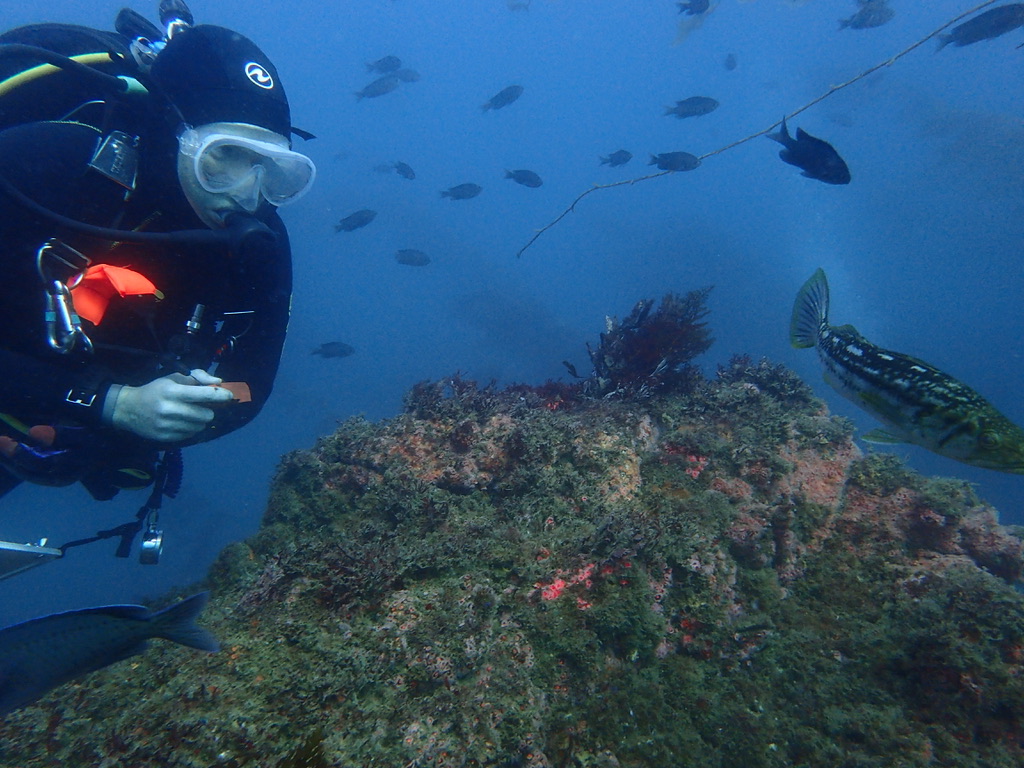
From June 2008 to January 2009, the VRG performed SCUBA transects utilizing CRANE methodology at 44 locations throughout the Bight; two locations near Santa Barbara, seven along the Malibu coast, eight along the Palos Verdes Peninsula, three in King Harbor, two in the Horseshoe Kelp near the Port of Los Angeles, six inside the Port of Los Angeles, two at Santa Barbara Island, five at San Nicolas Island (including Begg Rock), six at Santa Catalina Island, and three at San Clemente Island.


Fish and Invertebrate Surveys of Rocky Reefs in the Southern California Bight in accord with the Marine Life Management Act

(Funded by California Department of Fish and Game/Cooperative Research and Assessment of Nearshore Ecosystems)

In 2003-04 the California Department of Fish and Game supported a cooperative research program referred to as the Cooperative Research Assessment of Nearshore Ecosystems (CRANE) that sampled 88 reefs with standardized protocol from Santa Cruz to the Mexico Border including the southern California islands.In 2003-04 the California Department of Fish and Game supported a cooperative research program referred to as the Cooperative Research Assessment of Nearshore Ecosystems (CRANE) that sampled 88 reefs with standardized protocol from Santa Cruz to the Mexico Border including the southern California islands.


Vantuna Research Group

  • Scientists
  • Undergraduate Research Students
    • Student Spotlight
  • Current Research
    • Life History & Otolith Studies
    • Rocky Reef Ecology
    • Estuarine Ecology
    • Environmental Monitoring
  • Dive Program
  • Publications
  • Resources
    • Opportunities
    • Multimedia
    • Training PowerPoint Presentations
  • Vantuna Research Group: vrglogo
  • Location:
    Moore Laboratory
    1600 Campus Road
    Los Angeles, CA 90041
  • Phone: (323) 259-2955
  • Email: vrg@oxy.edu

Occidental College

  • For Parents
  • Employment
  • Contact Us
  • Maps & Directions

1600 Campus Road Los Angeles, California 90041