Elliot Tuttle ’22’s microbudget debut feature is one of the year’s breakout indie films—but getting there was its own odyssey
The screensaver on filmmaker Elliot Tuttle ’22’s phone is a still of Nicole Kidman from a photo call for the 2004 movie Dogville. “She is my hero—I love her,” he says. “I don’t play about her.”
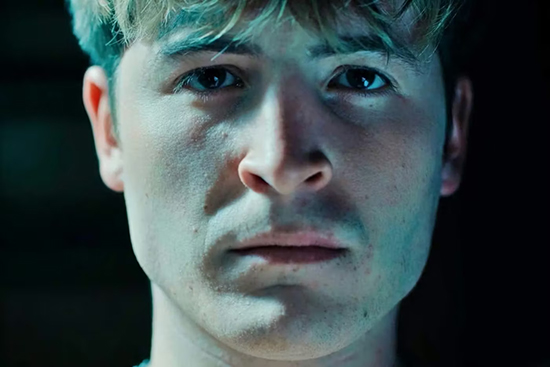
For many theatergoers, Kidman’s face is one of the last things you see prior to the start of a film at the nation’s most popular theater chain. Yet Tuttle’s debut feature, Blue Film, never played at an AMC theater. The unrated film’s logline might explain why: Fetish camboy Aaron Eagle agrees to spend the night with an anonymous client, only to discover a disturbing tie to his past.
Instead, the film followed the indie route, playing at smaller chains such as Laemmle and Landmark and at art-house theaters across the country. There were moments when Tuttle, 26, wondered if anyone would ever see it. “I wrote Blue Film when I was 23, made it when I was 24, and had its festival premiere when I was 25.” After a limited run in theaters, Blue Film landed on streaming platforms in mid-June, where it is likely to reach even more viewers.
From an early age, Tuttle aspired to be a film critic. Using Weebly, he built a website where he posted “a million reviews”—give or take—from his home in Bangor, Maine. As a budding cineaste, “I had a teacher who did an independent study with me on French New Wave cinema,” Tuttle recalls. He was also reading a lot of Cahiers du Cinéma, which was the launching pad of critics-turned-filmmakers François Truffaut and Jean-Luc Godard. “That was around the time when I felt like I could make movies if I wanted to.”
As a media arts and culture major at Oxy, he took film-related classes with Aleem Hossain, Vivian Lin, and Diana Keeler ’09 and art history electives with Professor Amy Lyford. His work-study job was manning the MAC Cage, the equipment checkout room (“I spent most of the time watching movies and waiting for someone to come in”). Not far from campus, he had an internship with Duplass Brothers Productions, working with his mentor, actor and indie filmmaking icon Mark Duplass.
Tuttle’s education was disrupted by the COVID-19 pandemic, when the College pivoted to remote learning for more than a year. During that time, he took a script he had written in one of Hossain’s classes and made it into a three-part narrative podcast, Lina’s Song, with Duplass as executive producer.
Tuttle returned to campus as a senior and developed his MAC comps film soon after. The short—about a writer struggling for material and the sex worker he hires to tell him about her life—shares some thematic DNA with Blue Film. (“No one will ever see it again,” he adds with a laugh.)
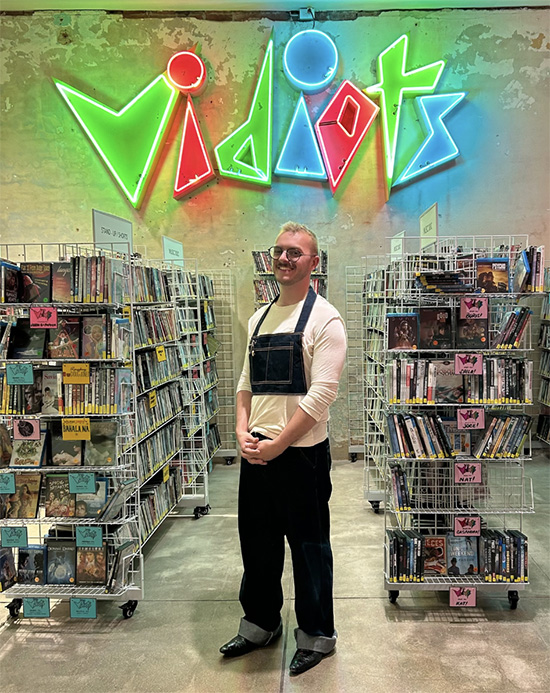
Over the course of developing Blue Film, Tuttle lived in East L.A. and worked at Vidiots, the nationally renowned nonprofit video store that relocated to Eagle Rock in 2023. (Vidiots gets a shoutout in the credits and hosted a screening of the film before its theatrical release.) “I was very happy to spend three years of my life there,” says Tuttle, who recently moved to New York.
In thinking about his debut feature, Tuttle wanted to make something producible—an intimate chamber piece that had two characters in a room. He was inspired by the work of French filmmaker Catherine Breillat, many of whose films explore adolescent sexuality. “I was also journaling a lot about my own experiences and thinking about having a crush on my teachers in middle school,” he says.
As the screenplay evolved, “It also became a film about loneliness, especially as a gay man in a big city. Internet culture finds its way in there,” he says. “There's also a lot about a generational gap in the way that we think about love.”
Making his first feature on a shoestring budget gave Tuttle a sense of creative freedom. “I knew that if it was terrible, I didn’t have to show anybody,” he says. “All my producers [including Waylon Sall ’22 and Will Youmans ’20] were very helpful in guiding me, but no one was ever really stopping me.”
When did he know that what he was making was not terrible? “It takes a long time. On set, it felt kind of like collecting diamonds to hopefully be able to make a necklace afterward. You don't know if it's good or not until at least the third cut.”
Tuttle trimmed Blue Film down to a lean 82 minutes from an initial cut of an hour and 50 minutes. “I was so attuned to the rhythm of the film and the rhythm of every scene that if something didn’t feel like it fit to me, I would cut it,” he says. “Once we had a cut of the film that my team and I were proud of, we thought that the process would be smoother than it was.”
“When I saw the rough cut, I was like, this is gonna be explosive,” Duplass said on his TikTok page. “This is exactly the kind of movie that film festivals need to be showing—new voices, cheap cinema—and everybody rejected it” because of the film’s “dangerous” subject matter. “And I kept thinking, that’s exactly why we need to be telling these stories.”
After more than a dozen “no’s” from festival programmers, including Sundance and SXSW, Blue Film got its first “yes” from the Edinburgh Film Festival, where the film premiered on August 16, 2025.
The film is anchored by veteran actor Reed Birney, a Tony Award winner in 2016 for The Humans, and British actor Kieron Moore (Vampire Academy, Boots). “Sometimes I think about when we first sent the script out,” Tuttle says, “who would have trusted a microbudget film made by a just-out-of-college, first-time feature filmmaker with this subject matter? These actors were so much braver than I realized. So I feel very grateful and lucky to have them.”
Following a buzzy advance piece in Vanity Fair, Blue Film launched in Edinburgh to critical raves, and it continued to gather momentum on the festival circuit throughout the fall. In February, Obscured Releasing picked up Blue Film for theatrical distribution in the United States and Canada, opening it in limited release in early May. (The film has since secured international distribution in the United Kingdom, Spain, Germany, Austria, Switzerland, and across Latin America.)
Armed with a 91% Fresh rating on Rotten Tomatoes and a Metacritic score of 86, Blue Film received a rave review from The New York Times’ Wesley Morris, who wrote: “Some of what feels good about Tuttle’s movie is that, for all of the places it’s bold enough to go, I couldn’t describe it as fearless. It’s full of fears, and it’s daring us to face them.”
Among the first theaters to screen it was the IFC Center in New York City, which holds special meaning to Tuttle: “I grew up driving down to New York from Maine and seeing movies at the IFC Center with my dad.”
At a time when many movies quickly disappear from theaters, Blue Film played at the IFC Center for nearly eight weeks. “It’s kind of the Wild West right now for indie distributors and this industry is constantly changing,” says Tuttle, who has been supporting Blue Film’s rollout through interviews and in-person screenings. “Every week you have to adapt.”
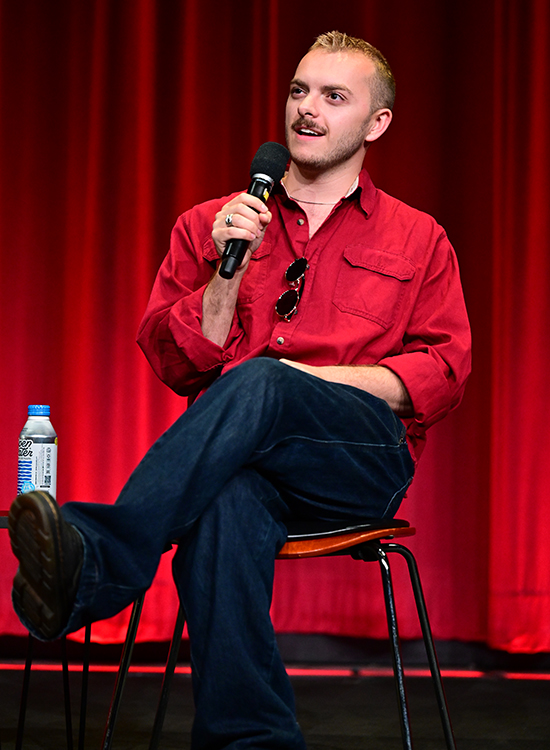
In an audience Q&A during opening weekend in Los Angeles, “There was this one woman who said, ‘I haven't been to a theater in six years, but I really wanted to see this movie.’ I loved hearing that,” Tuttle says. “That makes me happy.”
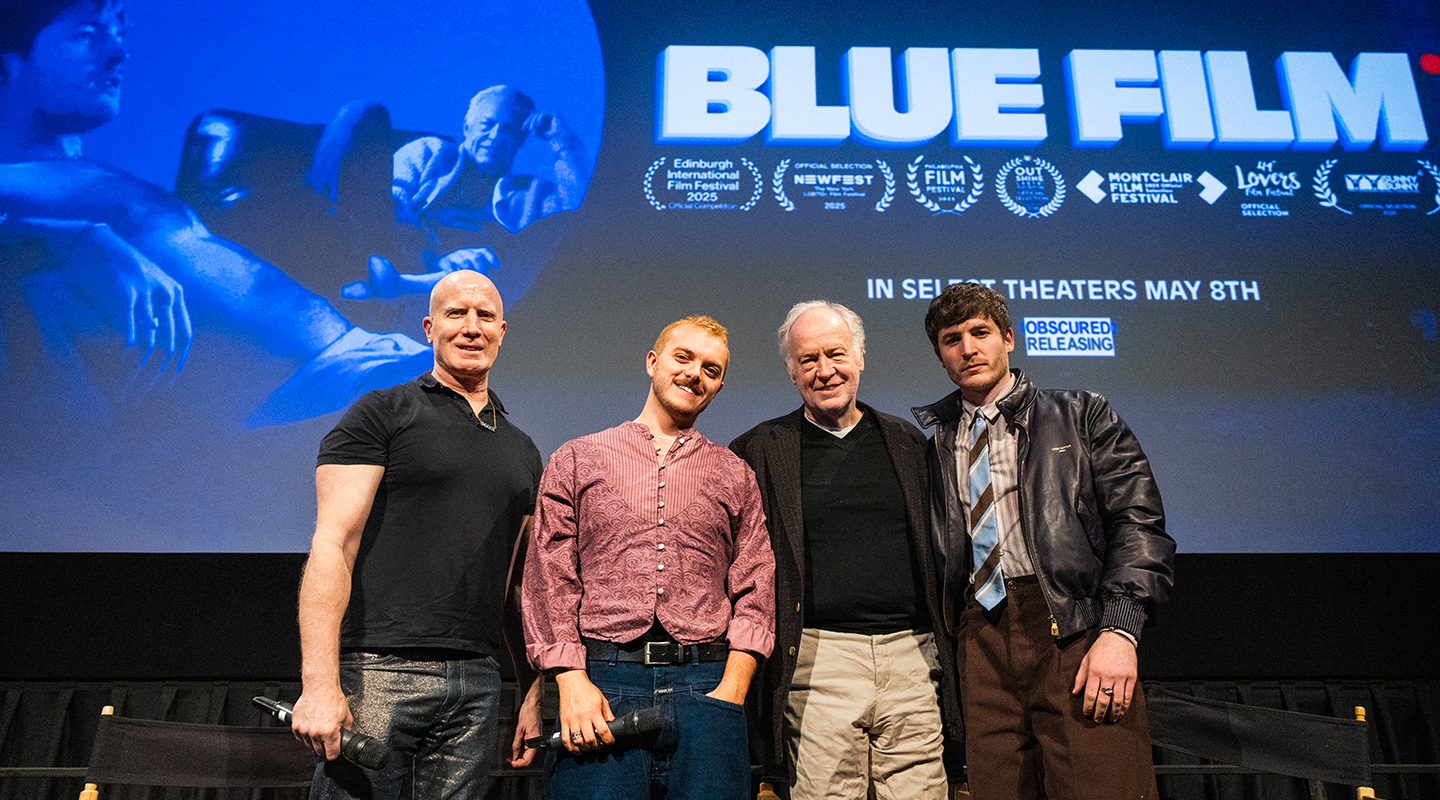
Top photo: Tuttle, second from left, with actors Reed Birney and Kieron Moore at a screening of Blue Film at the IFC Center in New York City. (Photos courtesy Obscured Pictures)