New industry partnerships, expanded course offerings, and a reimagined Booth Hall are positioning the Music Department for its second century
On the eve of Commencement in May, a select group of guests gathered at the Wallis Annenberg President’s House for a concert celebrating the music of Curb Records founder and chairman Mike Curb. With Curb—who received an honorary degree the following day—and other supporters of the John Branca Institute for Music and the Occidental College Music Department in attendance, Oxy faculty performed “The Candy Man,” “You Light Up My Life,” “Burning Bridges,” and “All for the Love of Sunshine”—signature songs from Curb’s decades-long career as a producer and label chief. Before the concert, senior music production majors also offered a demonstration in the Choi Family Production Center.
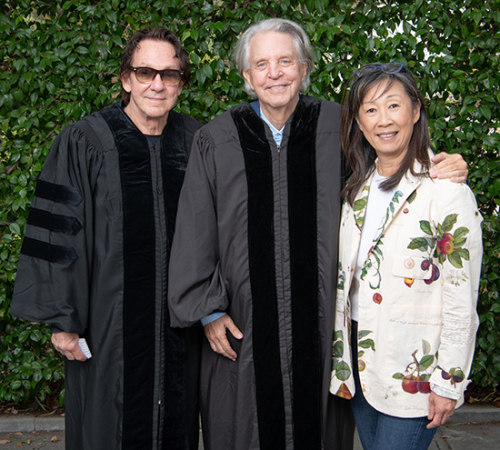
The audience included Lucia Choi-Dalton ’89 and John Branca ’72, whose combined generosity has fueled the evolution of the Music Department and the creation of the Branca Institute. “These new ideas didn’t just fall from the sky,” says David Kasunic, director of the John Branca Institute for Music and a member of the Oxy faculty since 2008. “They come from having built a proof of concept within the music program. But for these kinds of relationships to be sustained, they must be supported.”
The Music Department’s biggest new initiative over the past year was the launch of the Mike Curb Endowed Program in Popular Music History, which brought veteran music producer and composer Michael Lloyd to Oxy as the inaugural Linda and Mike Curb Fellow. Lloyd spent time with students in courses including recording techniques; composition; the history of punk and metal music; and the music industry. In the coming year, he also will speak to students in the music copyright course, provide guidance to the Glee Club and College Chorus, and join Assistant Professor Ramona Gonzalez ’09’s American popular song course to discuss the Beatles and the Beach Boys.
One of Lloyd’s ideas was to assemble a panel of industry experts to visit campus to hear music by five selected Oxy seniors—from singer-songwriters to producers and engineers. “Each student played two tracks, talked about their process, and received feedback from the panel,” Kasunic says. “That was so successful that we’re going to make it a yearly event. It’s not about creating something within an academic bubble but having it vetted by leading industry professionals who can offer unvarnished critiques and give our graduating students direction. It also strengthens our ties with the larger music community.”
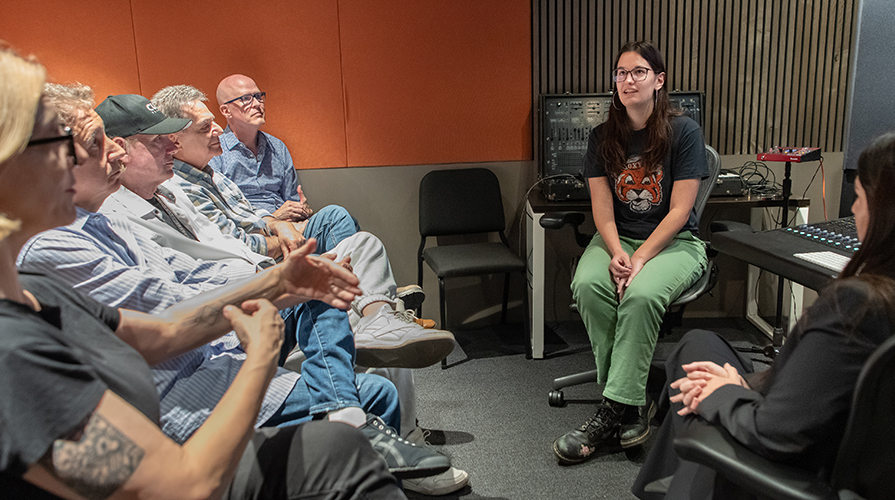
The first major Branca Institute event of the year was a panel in October, “Producing the Singing Voice,” featuring Gonzalez and two of her singer-songwriter peers. Moderated by Catherine Provenzano of the UCLA Herb Alpert School of Music and sponsored by the Pacific Southwest Chapter of the American Musicological Society, the panel sparked potential collaborations with USC, UCLA, and other area schools while introducing attendees to the Branca Institute’s work. An immersive workshop held in April, also sponsored by the Branca Institute, examined the influence of Brazilian music on contemporary popular music and was led by Visiting Assistant Professor Joao Martins.
The Branca Institute also is bringing more working professionals into the classroom. This fall, Music Branding and Marketing will be taught by Olivia Wilk ’19, associate director of international marketing at Sony Music Entertainment. Wilk double-majored in diplomacy and world affairs and East Asian studies at Occidental and participated in the Kahane U.N. Program. In the spring, Corey Field, a prominent entertainment lawyer, will teach Music Contracts and Financial Management. The institute also will underwrite the course Recording Techniques, sponsoring visits to prominent recording and sound engineers in Los Angeles.
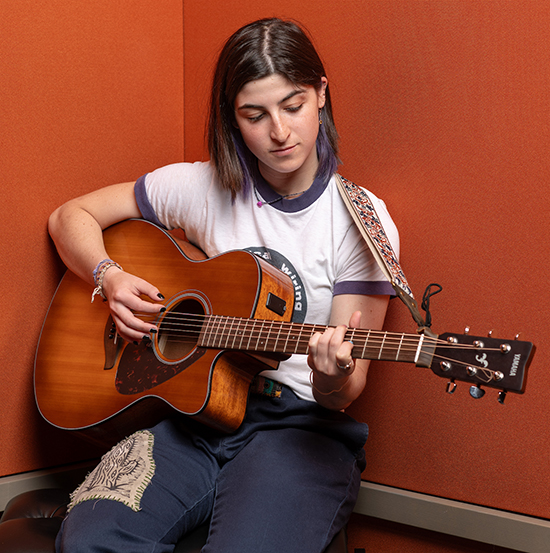
Another new undertaking is a music industry lecture series that taps into Los Angeles’ extraordinary concentration of recording artists, producers, engineers, composers, and music insiders. Already committed to appear is Steve Kaye, the Grammy Award-winning recording and sound engineer for Icelandic singer-songwriter Laufey—and Kasunic’s neighbor in Highland Park. “We’re surrounded by people doing incredible work in music,” Kasunic says. “These are people living and working right in our vicinity, and the Branca Institute will reflect that energy and excitement by bringing them to campus.”
The Music Department’s long-term goal is to create a standalone music business major for students interested in the business side of the industry. This would be in addition to the current music major, for performers, composers, producers, and songwriters. Kasunic points to the success of the newly created LA Phil-Occidental College Internship Program as evidence of the demand: “Most of the participants are not music majors, but they want to be involved in the music industry.”
As the department has expanded its curriculum to reflect the evolving music industry, its facilities have evolved as well. Recent renovations converted the former music library space in Booth Hall into the Choi Family Music Production Center and added a dedicated percussion studio in nearby Thorne Hall, modernizing instructional spaces.
A more extensive renovation of Booth Hall, now under way, will transform how music is taught and produced at Oxy. Improved acoustics, redesigned classrooms, and upgraded production facilities will create more flexible learning spaces. A new connection between Booth 208 and the Choi Production Center will allow students to record large ensembles on campus to professional standards and gain hands-on experience with live recording techniques previously available only off campus.
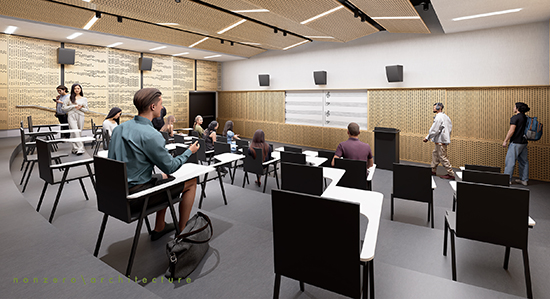
“The mixing and mastering process is finely detailed, sonically precise work,” Kasunic says. “For that to register, you need the right playback equipment. We have that in the Choi Production Center, but when students presented their work in Booth 204 or Choi Auditorium, a lot of that detail was lost. I’m excited that we’ll finally have a space that supports a more sophisticated level of listening.”
Even as the department expands its offerings in music production and the business of music, the Booth Hall renovation underscores its commitment to music history. Redesigned spaces will better preserve and showcase Occidental’s collection of historical keyboard instruments—including a 1779 Buntebart square piano, a clavichord, and a double-manual harpsichord—freeing up classroom space for modern instruction while allowing students to use them more regularly in coursework and performance. “These instruments are important for the study of music history,” Kasunic says. “In the future, we can wheel them out either for performance or for teaching, something that we weren’t able to do before.”
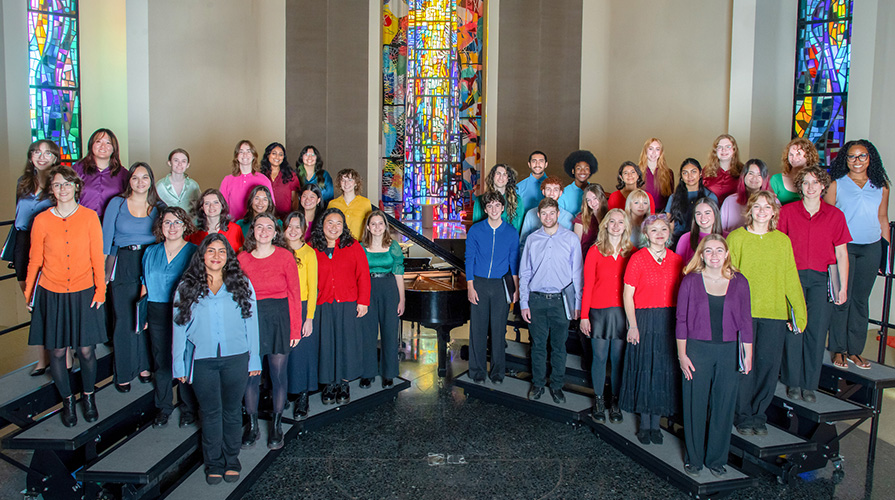
To commemorate the centennial of Occidental’s Music Department and music major, both established in 1926, three events will be held during Homecoming & Family Weekend on October 2-3. A Friday night concert will showcase Music Department students and faculty, a Saturday panel discussion will feature music majors from the last seven decades, and the traditional Glee Club Homecoming concert later that day will mark the organization’s 120th anniversary.
With the renovated Booth Hall expected to open in time for senior comps next spring (followed by a campuswide celebration at Homecoming 2027), the department has another milestone on the horizon. Kasunic is already looking beyond the building itself. He has begun laying the groundwork for a new partnership with Los Angeles City College, starting with a weeklong summer music program for prospective transfer students. In the coming year, the Branca Institute is planning conferences that will bring together music industry professionals and academics to explore topics such as music copyright and the legacy of disco.
In the words of McFadden & Whitehead, “Ain’t No Stoppin’ Us Now.” As Kasunic sees it, “Occidental is a musical place where things are happening—that’s important for our institutional identity. I think the years ahead will lead to better things for us.”
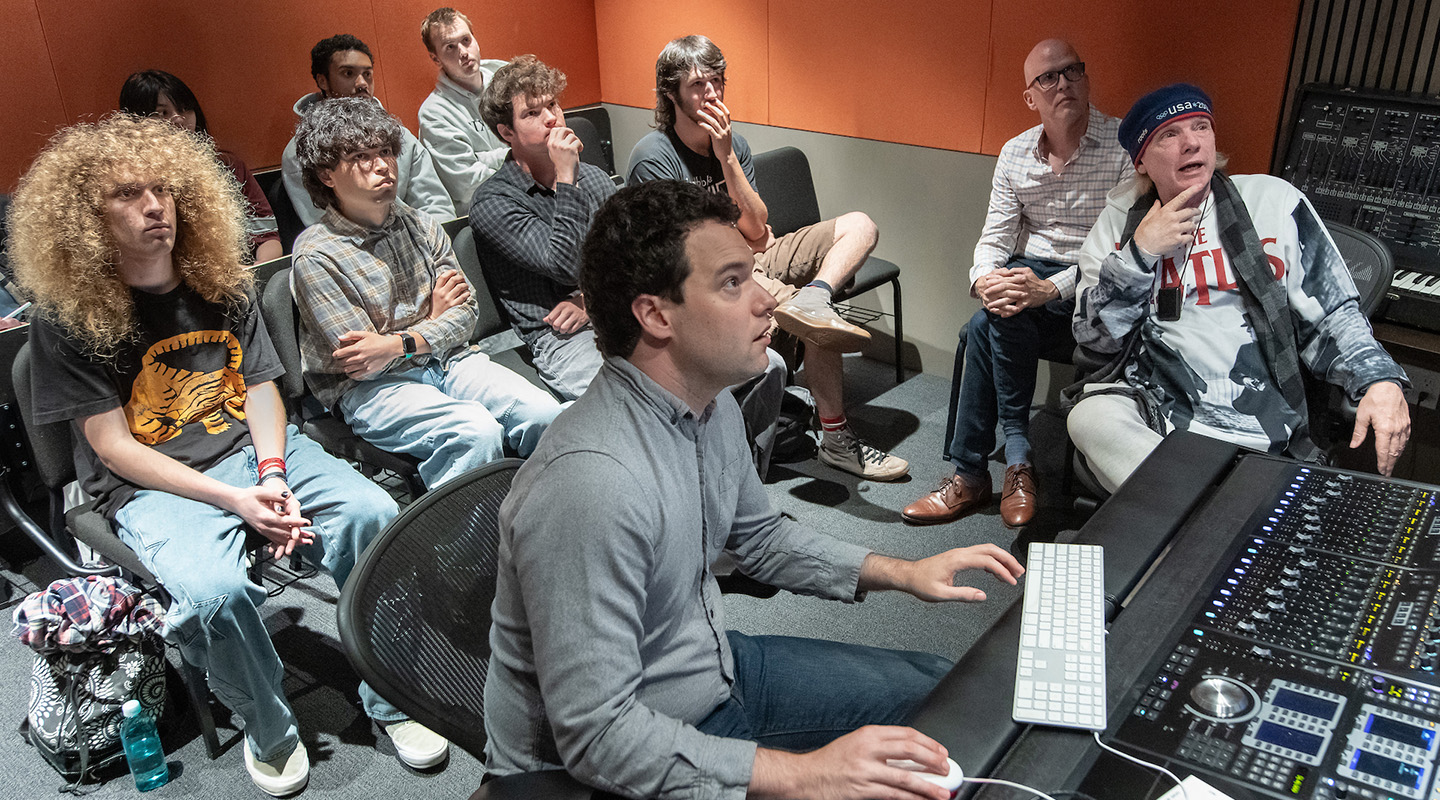
Top photo: Curb Visiting Fellow Michael Lloyd, far right, and Resident Assistant Professor Max Foreman, foreground, with students in Foreman's Recording Techniques class in the Choi Family Music Production Center on March 30, 2026. To Lloyd's right is Professor David Kasunic, director of the John Branca Institute for Music.