Occidental Faculty Highlight Sabbatical Work and Research
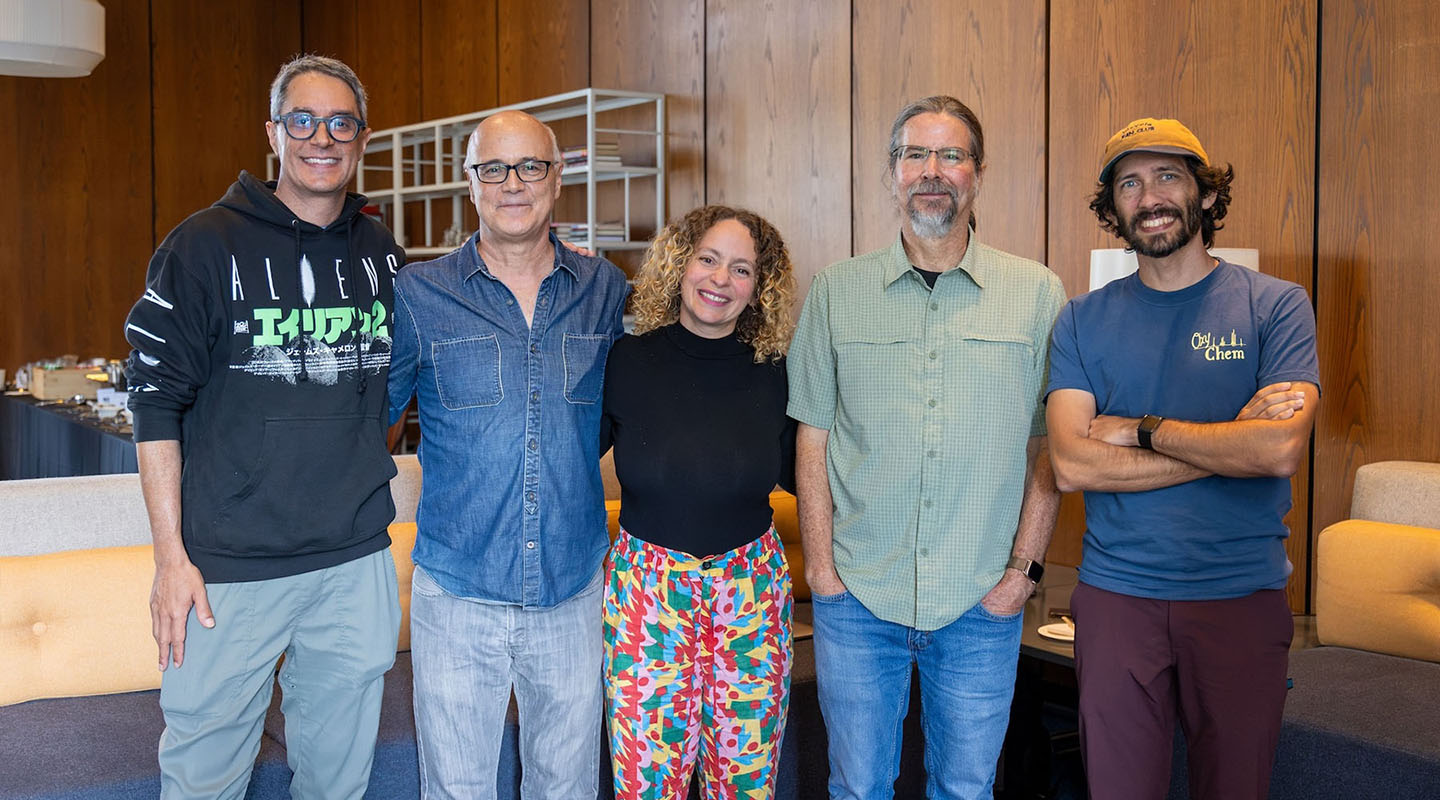
Five returning Occidental College faculty members highlighted their exciting sabbatical research and work during a fall Sabbatical Talks event.
From studying cone snails to examining transitional justice, Occidental faculty members presented their recent sabbatical research and work at a lively Fall 2026 Sabbatical Talks event hosted by the Center for Research and Scholarship (CRS).
Biology Professor Joseph Schulz; Chemistry Chair and Associate Professor Jeffrey Cannon ’07; Diplomacy and World Affairs Professor Anthony Tirado Chase; Cognitive Science Professor Aleksandra (Sasha) Sherman; and Media Arts and Culture Associate Professor Aleem Hossain all did short “flash talks” in airy Dumke Faculty Commons.
Joseph Schulz
First to present was Schulz, the founding director and curator of Occidental’s 117,000-specimen Cosman Shell Collection. Schulz spoke about his sabbatical research into the biomechanics and physiology of cone snail prey capture.
Cone snails are a diverse family of venomous marine snails. Among roughly 800 species, Schulz mainly focuses on fish-hunting cone snails. They hunt down, capture, and paralyze their fish prey. Schulz passed around the reddish shell of the geography cone snail. “It's the deadliest snail in the world,” he said.
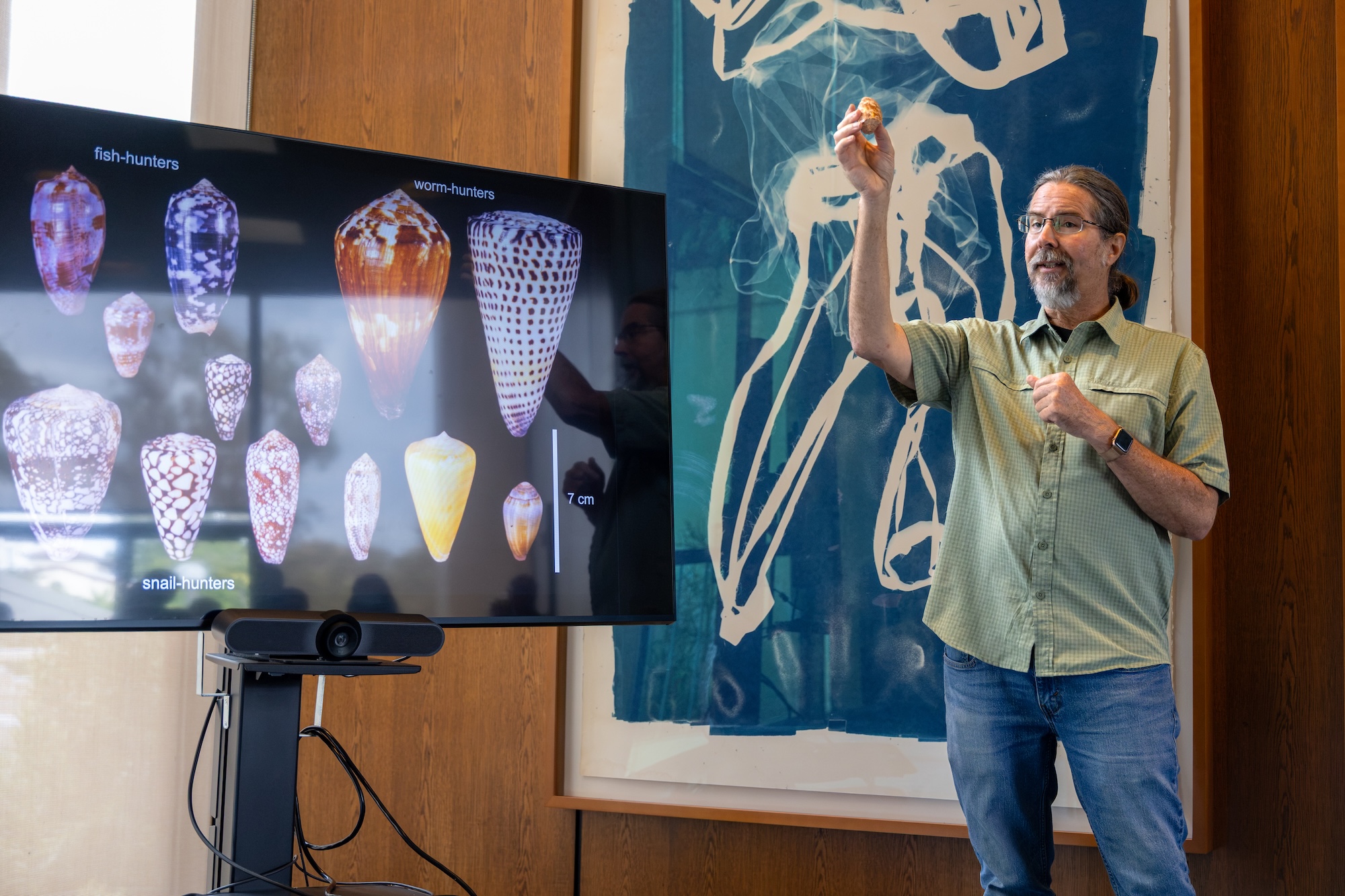
Schulz then highlighted the cat cone, a non-deadly cone snail. While most snails have a tongue-like radula ribbon with tiny teeth, cone snails have evolved theirs into single-use hollow radular harpoons. These harpoons connect to prey and inject venom composed of neurotoxins that block and modulate ion channels and cell surface receptors.
“They are important tools in neuroscience research, and there is even an FDA-approved drug called Prialt used to treat chronic pain, which is a synthetic version of a cone snail neurotoxin,” said Schulz.
A talk he gave at this year’s Society of Integrative and Comparative Biology meeting led to a project exploring the biomechanics of cone snail radular puncture, retention, and micro fracturing for venom delivery, he said. To print out 3D models of radular harpoons to section and analyze, Schulz worked with student Elise Coffey ’27 to do micro-CT scanning, using a CT scanner in Occidental’s Biology Department.
Other sabbatical projects included using isolated DNA from live animals and museum specimens and Oxford Nanopore sequencing to identify new members of the neuroexcitatory family that the Schulz Laboratory studies. Schulz and his students also did field work over the summer on the Hawaiian island of Kauai to find more snails.
Jeffrey Cannon
Up next was Cannon, whose Cannon Laboratory researches organic synthesis and catalysis. “I am an organic chemist, and that’s scary to a lot of people,” he said. “But I promise you we do some really fun stuff. We are really interested in reaction discovery and reaction development, and in particular reactions that make bonds between carbon atoms.”
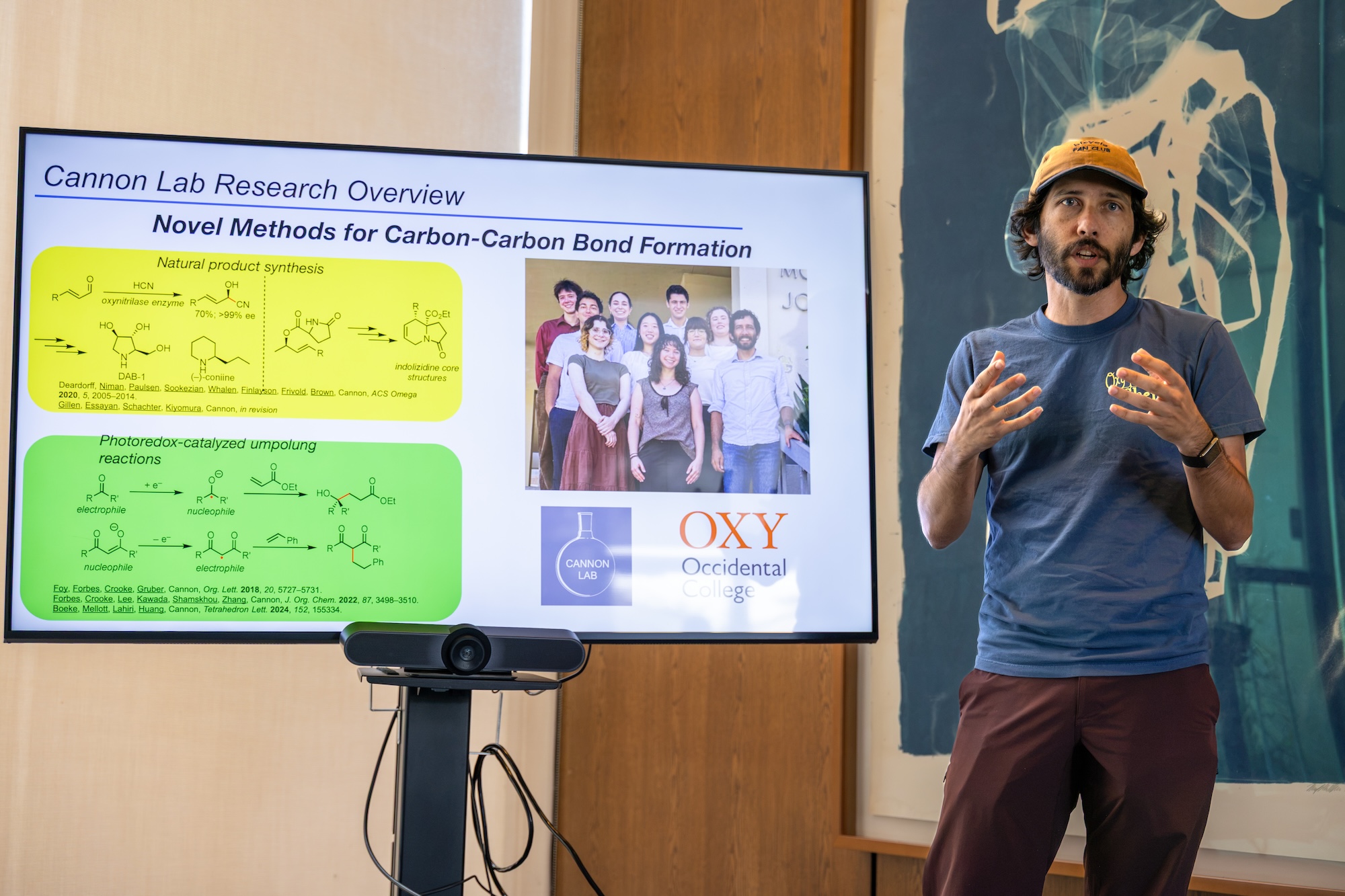
Cannon brought up the molecule palytoxin, synthesized in 1994 by the late Yoshito Kishi at Harvard University, and considered at the time to be the “Mount Everest of natural product total synthesis,” Cannon said. He talked about the “economies” of synthesis, from yield—the efficiency of the process—to atom economy to other green principles, such as reducing waste and reducing energy input.
“When I enter into my sabbaticals, my goal is usually to take projects that are near completion and push them over the finish line,” Cannon said. One of those projects was discovering a new reaction in photoredox catalysis: that energy can be taken from visible light and used as a substitute for chemical energy.
“We also had the backbone of a synthesis project to make molecules known as indolizidines, which was close to completion, but the students who worked on it had graduated and so it was up to me to kind of get it done,” said Cannon. Indolizidine is predicted to be present in 30 to 40% of biologically active natural products.
Anthony Tirado Chase
Chase’s sabbatical included a research fellowship at the Oñati International Institute for the Sociology of Law in the Basque Country, in Spain. There, he advanced his research examining what the U.S. can learn from transitional justice processes around the world. Transitional justice refers to how societies address legacies of human rights abuses.
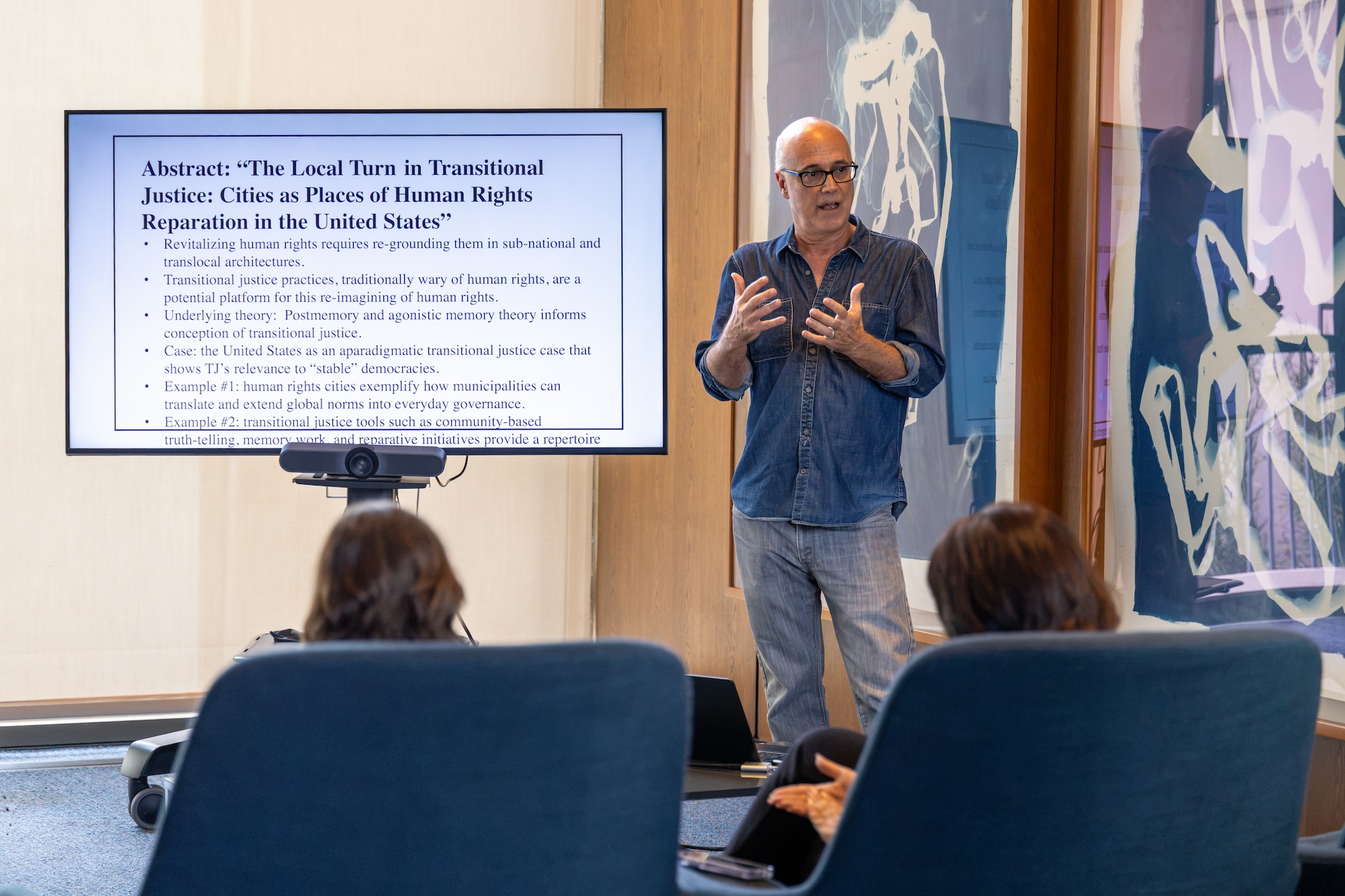
“I converted my research interest from human rights writ large to human rights at the local level and human rights at the city level, along with transitional justice processes at the local and city level,” he said. “That led me to my sabbatical.”
In Latin America, including in Colombia, there are well-curated sites of memory, he said. “In Spain, there's been a so-called pact of silence around the past, in terms of the transition to democracy,” said Chase. “There are very few sites of this sort. I went to pretty much every one of them, because I can count them on the fingers of one hand.”
He also went on research trips to sites of memory and institutions engaged with past state violence, memory, accountability, and democratic reconstruction in both Argentina and Portugal.
From that research, Chase completed a chapter on how the U.S. can engage with global experiments in transitional justice as a platform for human rights repair, and a chapter on how transitional justice can help the U.S. with confronting the past and reimagining the future. He co-wrote the latter with recent Oxy alum Nate Lundstrom ’25.
Aleksandra (Sasha) Sherman
Sherman talked about co-writing, with Philosophy Department Professor Clair Morrisey, the book Why the Arts Matter (Cambridge University Press), which was published this past July.
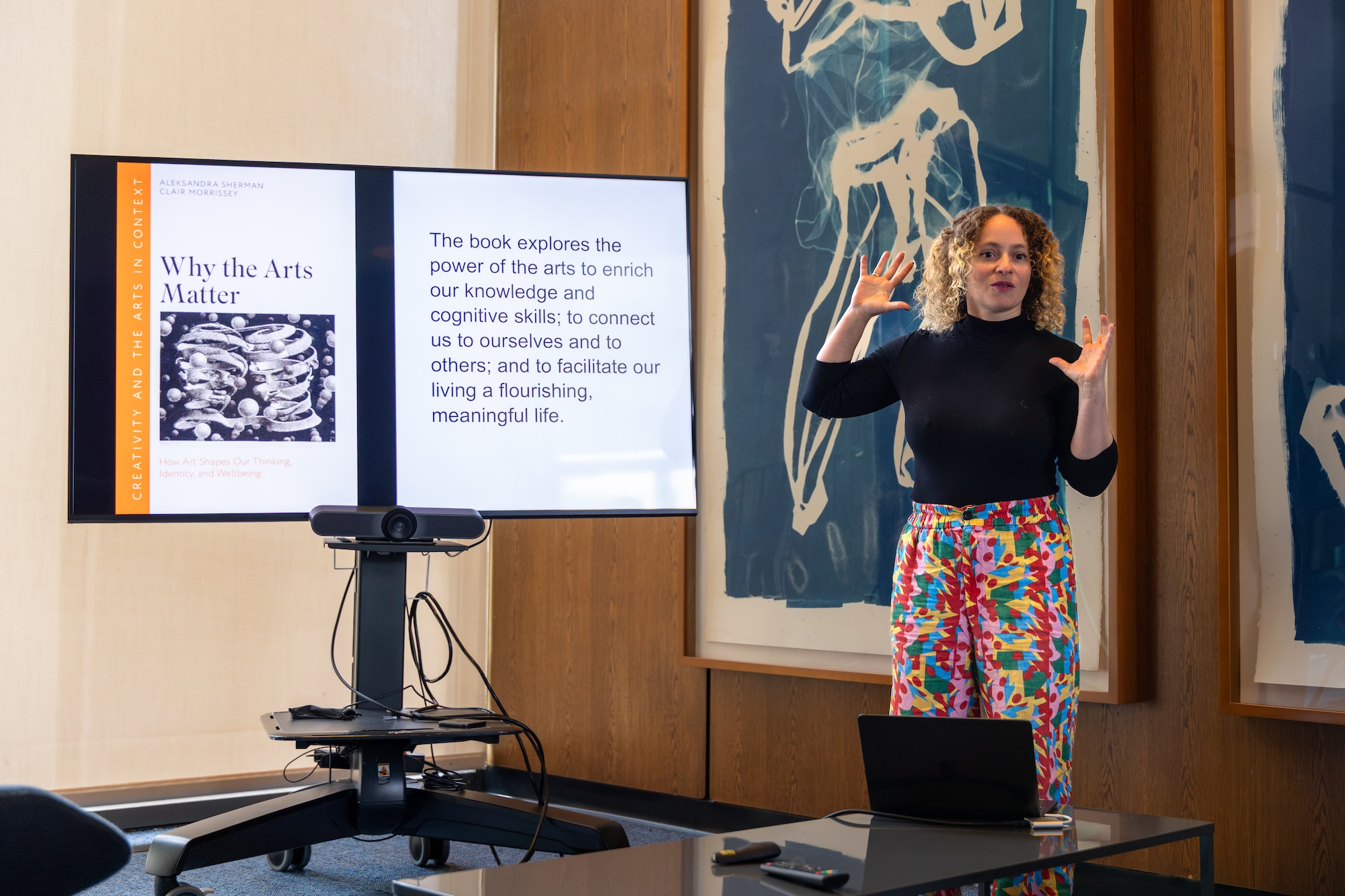
“It’s about how art shapes our thinking, identity, and wellbeing, and explores the power of the arts to enrich our knowledge and cognitive skills, to connect us to ourselves and to others, and to facilitate our living a flourishing, meaningful life,” she said. “That was one project that I was really excited to complete.”
She also worked on an ongoing project with her students Shikha Iyer ’28 and Anastasia Savastio ’28. They conducted interviews with artists on how AI is integrated into creative workflows and experiences. Sherman and Iyer, in collaboration with Savastio, presented their research in Philadelphia at the June 2026 annual meeting of the Society for the Neuroscience of Creativity (SfNC).
Another sabbatical project that Sherman worked on with a group of students from the Cognitive Science Department was a paper published in May 2025 on fostering meaningful engagement and well-being through slow-looking and guided interviews in art galleries, based on exhibitions at Oxy Arts.
“I had a student in my current class who wrote about her experience as a participant in that experiment, and how it changed her whole view of the arts,” said Sherman. “She was nervous to be in a museum. Now she's also in my lab doing that project.”
Aleem Hossain
To close out the Sabbatical Talks event, Hossain introduced himself at the beginning of his presentation honestly and directly. “I'm not a Ph.D.,” he said. “I'm a filmmaker. I write and direct movies. That is my work. And that's what I teach as well.”
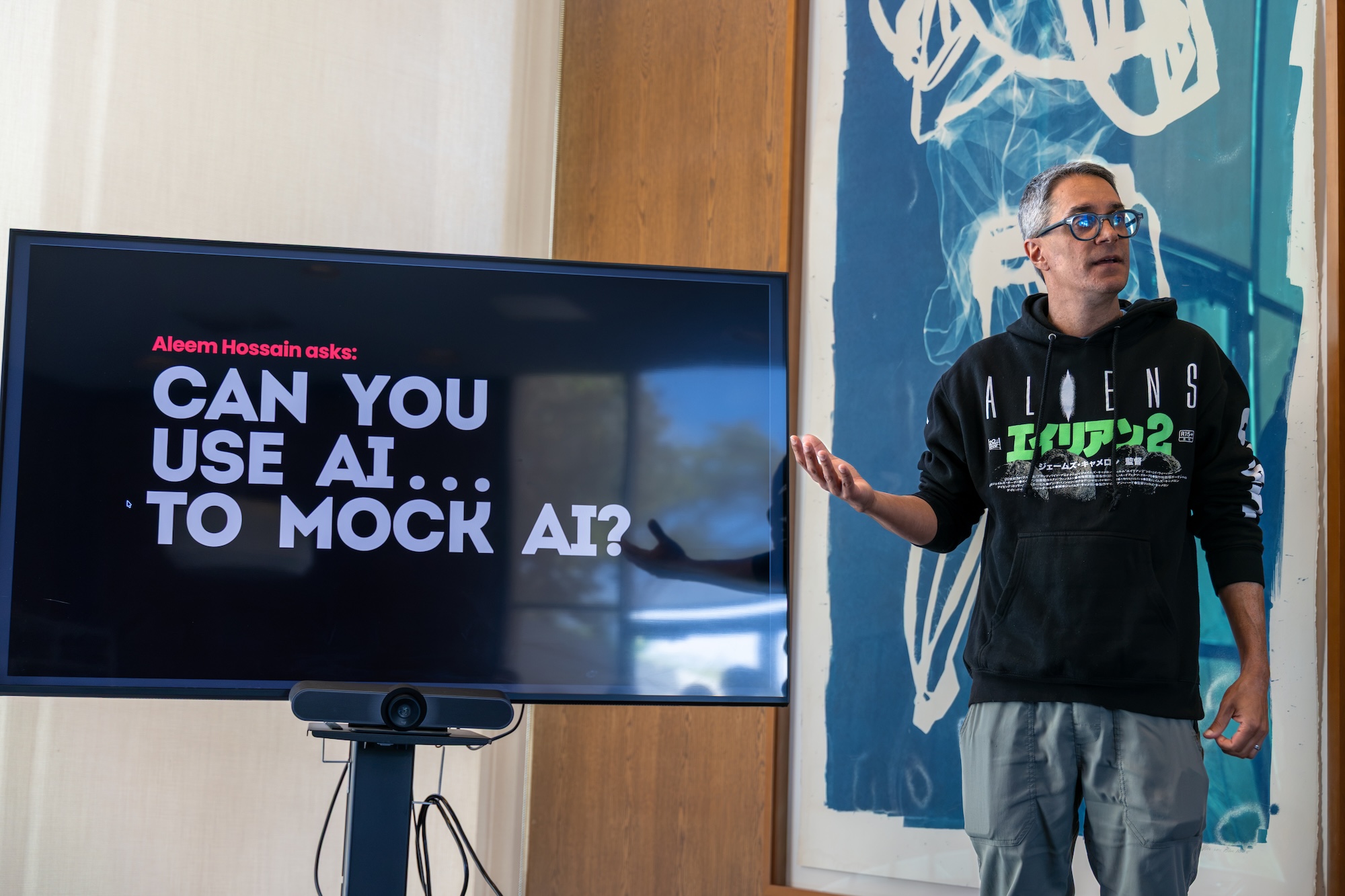
Over his sabbatical, as a filmmaker both skeptical of generative AI and experienced in using it, he ended up writing and creating a short AI-generated film, Slop & Awe, that he showed during the Sabbatical Talks. He’s set to teach a Spring 2027 course on AI filmmaking.
In the film, AI images merge and shift. In one scene, a bulldozer pushing mountains of books sinks into a hole that morphs into muddy sludge. In another scene, the sludge turns into a monster that knocks over large buildings, while rooftop party-goers cheer.
Hossain licensed the film’s song, “Keep Smiling at Trouble (Trouble’s a Bubble),” and made donations to the Authors Guild, Concept Art Association, and the Entertainment Community Fund to mimic the idea of a carbon offset.
“I love art that is contradictory and hard to resolve,” Hossain said. “I said [to myself], ‘Okay, I don't like AI. I want to keep using AI and I like contradictory art. I'm going to make a film that mocks AI, but I'm going to use AI to do it.”