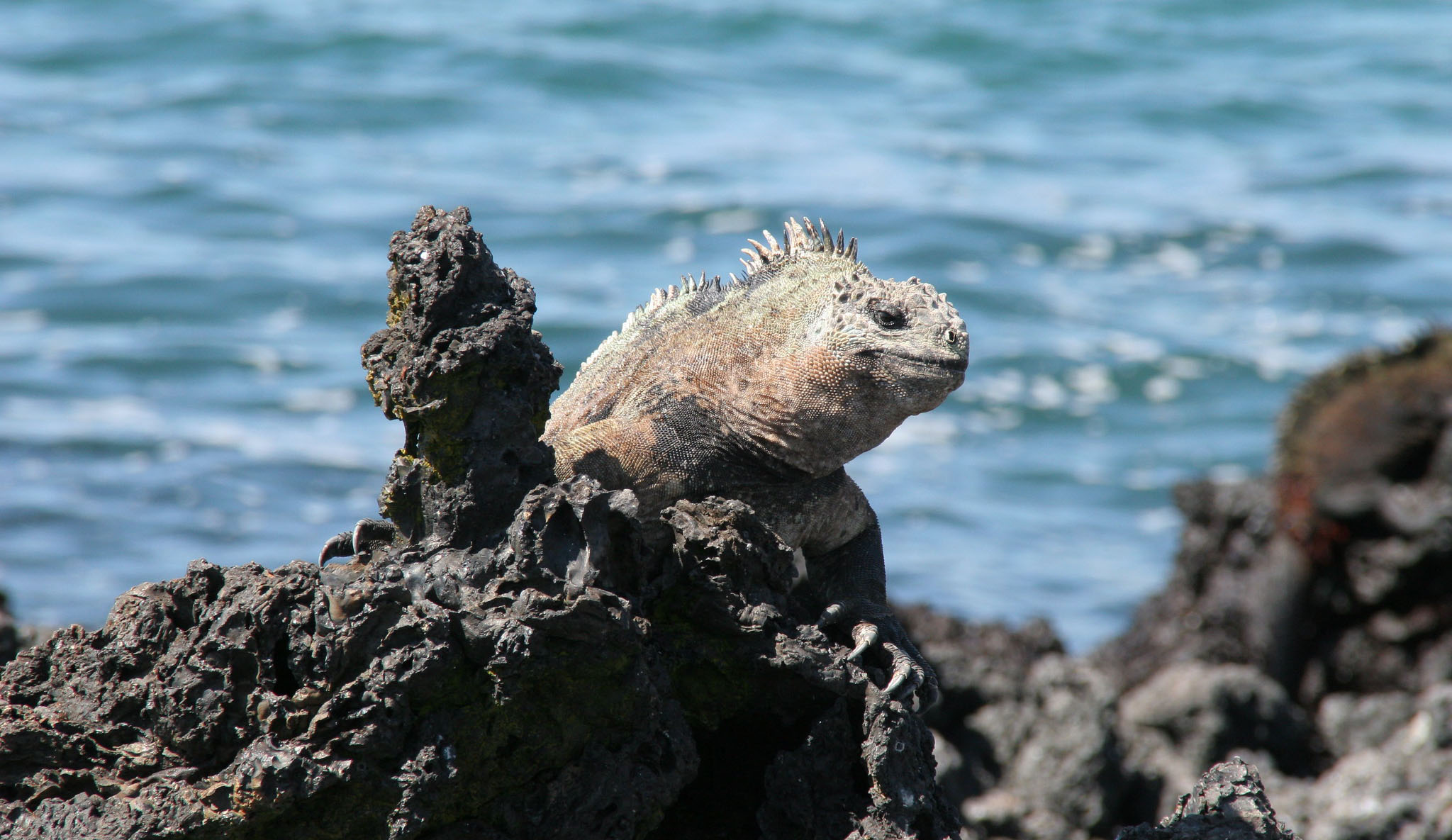
Photos courtesy of Mayah Aguilera
Student
Kinesiology
Urban & Environmental Policy
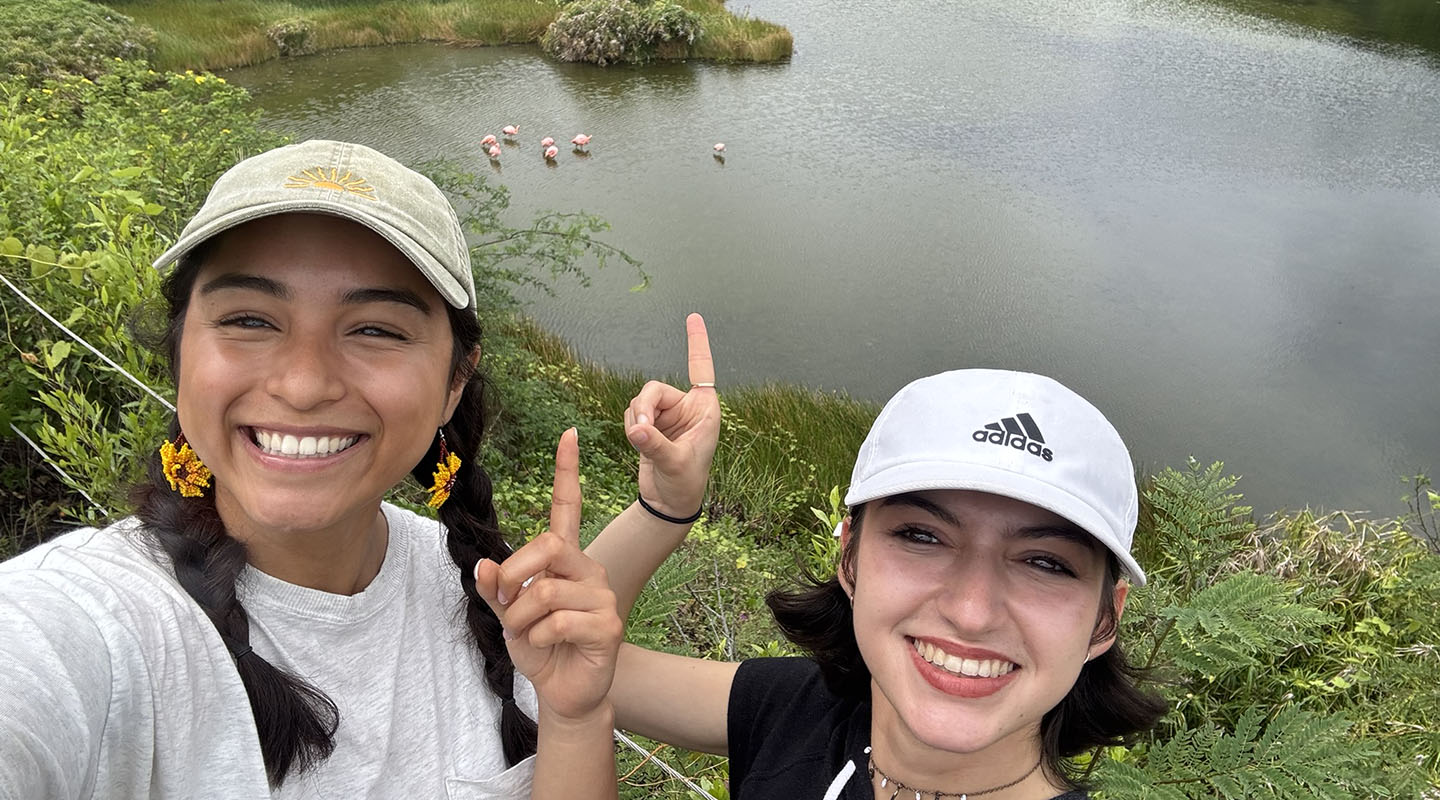
A faculty-led research experience in the Galápagos Islands allowed Mayah Aguilera ’28 to explore new possibilities for connecting health, community, and personal growth.
While the rest of her research team set out in ocean kayaks, Mayah Aguilera remained on the shore of Isabela Island, knowing that her motion sickness would make the excursion difficult. With nowhere she needed to be, she found herself sitting with an unfamiliar feeling: stillness.
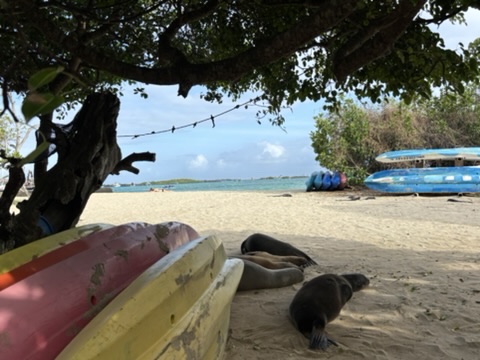
Growing up in fast-paced Los Angeles, Mayah had internalized the idea that she should always be doing something. But thousands of miles from home, the Occidental College kinesiology major found herself questioning the rhythm she had always known.
“I was realizing that a slower pace is another form of living a healthy life,” she says.
The discovery was one of many Mayah brought home from an 18-day Richter Faculty-Led Research Abroad project in Ecuador’s Galápagos Islands. Led by Assistant Professor of Urban & Environmental Policy Karla Peña, the project brought Mayah and two other Oxy students to the islands to investigate conservation and the region’s food system.
Occidental’s Richter program gives small groups of students the opportunity to join a faculty mentor for an intensive international research or creative project. Projects, which take place over the summer, span academic disciplines and allow students to apply their education through cross-cultural engagement, fieldwork, and close collaboration with professors.
For Mayah, who grew up in East L.A. and is a first-generation college student, applying for the opportunity meant pushing through the feeling that an international research experience like this might be beyond her reach.
When she learned about the Richter project through Occidental’s International Programs Office (IPO), encouragement from IPO director Robin Craggs, her professors, and her roommate helped her imagine herself taking part.
“I applied out of fear because I was intimidated by this opportunity—I felt like it was out of reach for me,” she says. “But that fear, that's what pushed me to go for it. And I’m so glad I did.”
Because the Richter experience was fully funded, Mayah could participate without taking on the cost of international travel and research. The program covered the group’s travel expenses and provided students with a stipend for necessities. That support made an opportunity that once felt out of reach more realistic.
In the Galápagos, the Oxy team studied the islands’ gastronomy, interviewing local restaurants about whether they purchased food locally or relied on imported goods. The students coded and analyzed this data and considered how tourism, globalization, and conservation shape a food system operating within an environmentally protected archipelago.
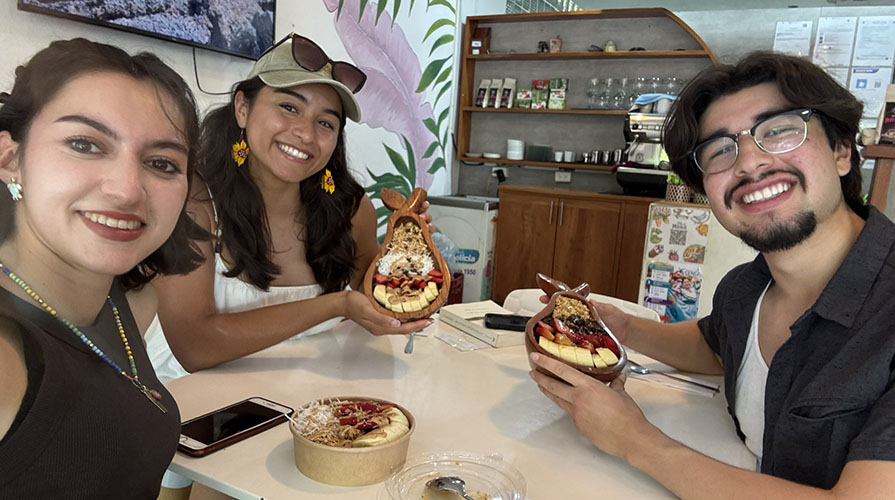
This research spoke to both Mayah’s kinesiology major and her Urban & Environmental Policy (UEP) minor. Studying the human body has taught her about physical health, while UEP has encouraged her to examine how access to healthcare, nutritious food, and other resources affects entire communities.
The interdisciplinary project also offered a new way to experience international travel. Instead of passing through as a tourist, Mayah immersed herself in the community, learning directly from residents through in-depth and meaningful conversation. Professor Peña’s family ties to the Galápagos made the experience especially personal, introducing students to relatives, friends, and local perspectives.
“When you're a tourist, you're just passing by the community, but when you're actually engaging with it through an academic perspective, you're being curious about the community,” Mayah says.
The experience strengthened Mayah’s desire to improve her Spanish and engage more deeply with Spanish-speaking communities in Los Angeles and abroad. She is now preparing to apply for a study abroad program in Chile focused on public health and traditional medicine.
“Learning a different language has given me an opportunity to learn even more about people and their stories,” she says.
Pushing through my fear has given me the opportunity to grow through language, connection, and curiosity, which are lessons I now bring home to my Los Angeles community.
The trip also helped clarify one of Mayah’s long-term dreams: opening a community-centered gym where people can move their bodies, build relationships, and learn about health. Inspired in part by the Galápagos farmers who were passionate about feeding their neighbors, she now imagines incorporating a café supplied by local growers.
Ultimately, her Richter experience showed her that education can expand far beyond one subject, one classroom, or even one country—and that opportunities that initially feel intimidating may lead to the most meaningful discoveries.
“Pushing through my fear has given me the opportunity to grow through language, connection, and curiosity, which are lessons I now bring home to my Los Angeles community.”