Two children of Oxy professors grew up immersed in the magic of Shakespeare, Shaw, and Gilbert & Sullivan—in an era when a plucky little drama festival became their whole world
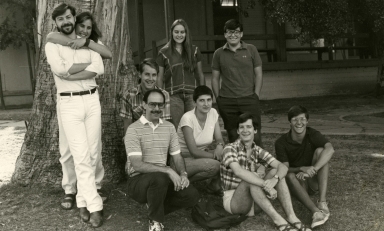
In the summer of 1960, Omar Paxson ’48, Sally Norton, and John Ingle ’50 launched a repertory theater company on the Occidental College campus. It was a leap of faith on a Depression-era budget, fueled by their belief in the transformative power of live theater and conviction that hard work could accomplish anything. As Omar’s daughter and Sally’s son, we grew up in that world— two shy, awkward kids who found a friendly place to fit in among quirky and creative people. We had the run of rehearsal halls, musty costume rooms, dusty scene shops, and giant outdoor performance spaces. We learned to sit still and be silent while big people rehearsed long, talky plays. Our parents sent us on stage when we were barely out of diapers. We cut planks of wood with power saws before we were qualified, climbed much too high on lighting towers, learned to make popcorn in industrial poppers, and routinely stayed up past midnight.
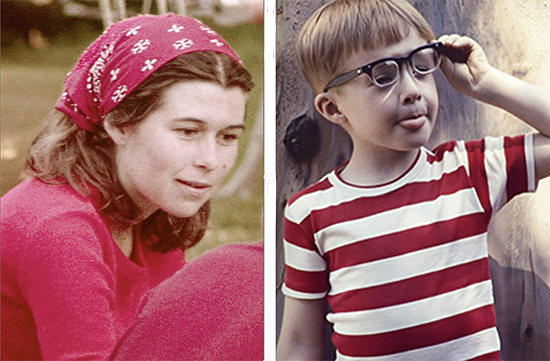
We never knew any other way of life and secretly pitied our friends with parents who came home at 5 p.m. for dinner. Ours would dip their toes in for a family meal before heading back to the theater for rehearsals every night. They were constantly working, but work was fun. Ours was a world where optimism prevailed and every problem had a solution.
In 1960, America felt young and our parents reflected that youth; all three were under 40 and one was only 26 when they embarked on their project. Their goal was to provide an educational experience for Occidental students and quality performances of classical plays for community members from the Greater Los Angeles area. Also, to break even. None of them were sure it would survive beyond one season, let alone endure four decades.
To say it changed lives would be a massive understatement.
That first summer, with a 32-member company, Omar, Sally, and John mounted productions of three comedies: Androcles and the Lion, A Midsummer Night’s Dream, and Iolanthe. The triumvirate of Shaw, Shakespeare, and Gilbert & Sullivan would form the backbone of subsequent seasons in which young actors received training in classical theater and audiences saw mostly jolly plays produced by enthusiastic people. Omar, Sally, and John took small paychecks, more a symbolic gesture than anything else, and there was enough money left over to pay a pianist. The schedule was demanding and the hours long. Rehearsals took place Monday through Friday from 7 p.m. to midnight, plus all day Saturday. Each play received 40 hours of rehearsal time.
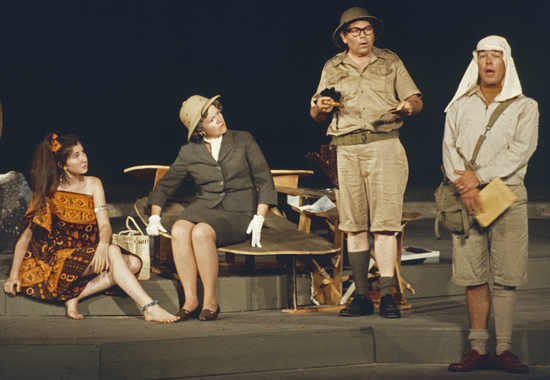
The venue was the great outdoors, starting on the steps of Thorne Hall, later moving to Remsen Bird Hillside Theater. There was an undeniable romance in performing under the stars where eucalyptus trees loomed and occasional mists descended fortuitously upon productions of Brigadoon. At the same time, actors contended with all the challenges of performing outside: punishing L.A. heat and air pollution, mosquitos, occasional fires, police helicopters circling overhead, and hunting coyote packs. On a handful of occasions, rainstorms required a massive undertaking to move the evening’s production to inside Thorne Hall. Costumes, props, and lighting had to be transported, the set dismantled, then adjusted, and directors had two hours before curtain to rearrange blocking for the actors. Not a single show was ever canceled.
An egalitarian ethic prevailed, set by our parents. They were always known as Omar, Sally, and John. No last names or title, and everyone did everything. An actor might have a major role in one play, be in the chorus of the musical, then paint scenery, sew buttons on costumes, learn how to hang lights, or build props the rest of the time. Frugality was key. Set pieces were salvaged from junk yards and costumes were fashioned out of donations, culled from existing stock in the Occidental College Drama Department, or scavenged from the wardrobes of company members. Attendance for all rehearsals was mandatory and lines had to be memorized by the first rehearsal. There was no down time. This can-do spirit accompanied by fly-by-the-seat-of-the-pants necessity created an extraordinary esprit de corps. Who needed sleep and food? We lived, breathed, and ate theater.
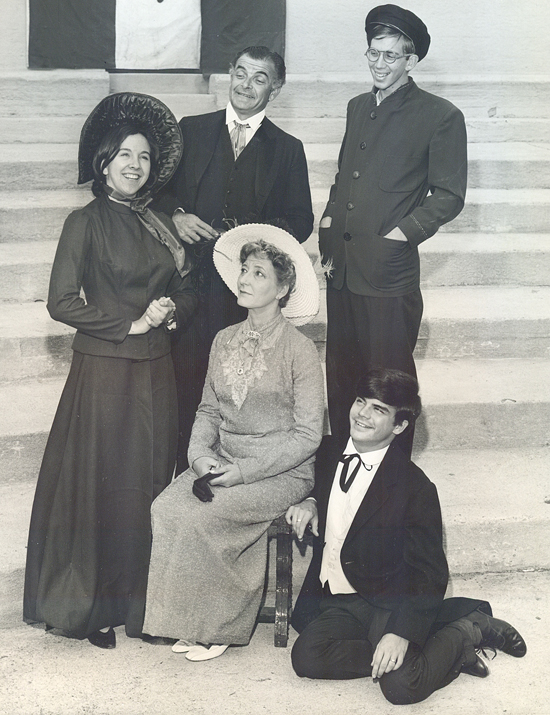
Our parents were the first to arrive for the nightly rehearsals and the last to leave. They planned, budgeted, directed, acted, and mentored the college students. They designed costumes, built sets, cleaned the bathrooms, watered the lawn, set up chairs, answered the phone, sold the tickets, handed out programs, and made the popcorn—all the while believing that hard work done in the Theater was the most fun anyone could possibly ever have. Theater problems were happy problems.
They brought us along for the wild ride.
We watched rehearsals late into the night since it was cheaper to let us roam the theater than to hire babysitters. The Norton children fell asleep on the cement steps of Hillside Theater, still warm from the summer sun. John Ingle’s daughters learned to sew in the costume shop and Laura Paxson negotiated a gig taking notes for John when his stage manager was behind the light board calling the show. Our parents threw us onstage for plays requiring children regardless of the subject matter. Laura was one of four children recruited to sing for Claire Zachanassian in The Visit. Omar always encouraged his own children, as well as his students, to grapple with the big ideas in great plays. The upshot was the opportunity to experience plays with adult themes from a very young age.
More light-hearted experiences included being in the wedding party in Italian Straw Hat when we were recruited to run all over the theater, hopping over prone bodies in a madcap chase scene. Escott Norton, then age 3, had a bathroom emergency during a tableau. His father, Oakley Norton ’56, shifted in front of him and Escott relieved himself off the back of the stage. The Ingle daughters built a plaster replica of Macbeth’s severed head, dripping with blood, for the 1969 production of The Scottish Play, in which their father played the lead. The prop went home with them at the end of the season, providing years of compelling Halloween decorations.
The Occidental College Summer Drama Festival defined our childhood, adolescence, and young adult years as we morphed from observers to full participants. The festival crackled with energy and there was nothing more exciting than the onset of summer, but not for the obvious reasons. For us summer meant more work, not leisure time. More important, it meant being part of something larger than ourselves.
Our parents invited us into an adult world, filled with charismatic college students, great plays, and late nights. We sewed, built properties and sets, acted, directed, hung the lights, stage managed, and ran the box office. We became night owls. Regardless of our individual passions, or the various directions our lives ultimately took, Summer Theater went absolutely bone deep. It’s in our DNA.
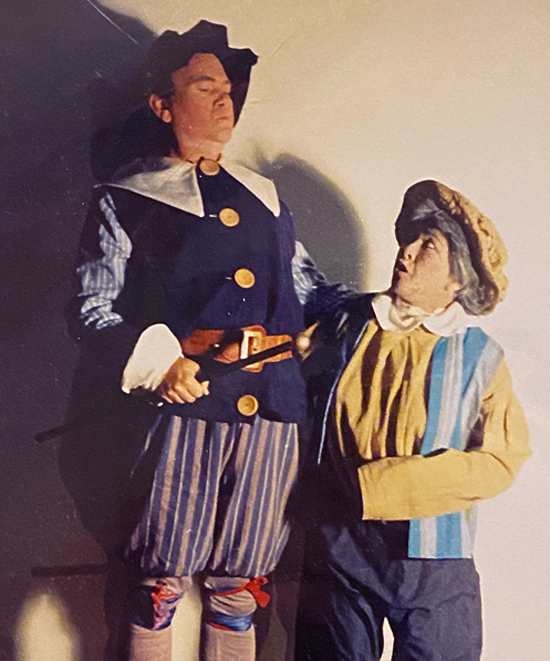
The ghosts of past performances linger at Thorne Hall and Hillside Theater. Ghosts of seasoned actors, neophytes, and everyone in between. A scrappy little orchestra accompanies Tary Ismond as he belts out “If I Were a Rich Man” from Fiddler on the Roof. Lisa Mudge-Meckel ’57, as the doomed Joan of Arc, kneels in prayer. Carol Stromme Shelton ’69 vamps her Mata Hari number in Little Mary Sunshine. Chris Shelton ’68 M’69 reclines on the grass, a few feet from the front row, looking up to the stars for “To be or not to be.” Marti Rolph ’66’s sweet singing and Pedro Martinez’s lyrical dancing in The Boyfriend. Ellyn Gersh Lerner ’73 leading chorines in a zesty “Take Back Your Mink” in Guys and Dolls. Gary Davis ’68, whipping casts into shape with his lightning-swift work tempo. David Parrish ’74, popping his outraged head out of the Turkish bath in Misalliance. Craig Fees ’74, thoroughly committed to ferocity and slobbering friendliness, in Androcles and the Lion. Sally Norton, a hilarious Veta Louise, in Harvey, Lucy Lee ’78, as her equally hilarious daughter, and Tom Shelton ’77 as whimsical Elwood P. Dowd, whose best friend was an invisible 6-foot-tall rabbit. John Ingle, embodying the delusional Peer Gynt. Omar Paxson and Josie Dapar ’59, as the original dumb-and-dumber duo of Dogberry and Verges from Much Ado About Nothing.
The sets designed by Dave Gibson ’67, with lighting by Ward Carlisle ’73. Grace-Lynn Ingle ’51 and Marlene Gothold at the piano.
All the actors who ever fell off the stage, missed an entrance, flubbed a line, forgot a prop, or performed when they were sick.
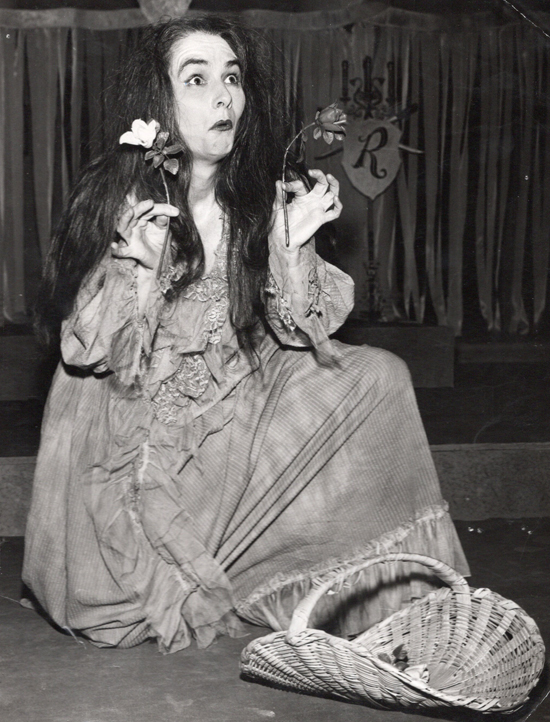
The big ideas endure as well: Intellectual freedom versus faith in Inherit the Wind. Jealousy leading to mischief and mayhem in A Midsummer Night’s Dream. Tragic vendettas in Romeo and Juliet. Innocent coming-of-age stories in Ah! Wilderness and I Remember Mama. The unorthodox behaviors of the best wacky family you’d ever want to know from You Can’t Take It With You. The value of the smallest events in life revealed in Our Town. Women’s rights in every Shaw play. Serious themes to sink one’s teeth into and silliness to entertain.
Our parents gave us a stage for our playground; all we had to do was show up on time and work hard. A sprawling cast of characters came together with a common goal they knew was good, even ennobling. Such audacious enterprises often fizzle or flame out. Summer Theater was an idealistic experiment that lasted, until it didn’t, and we are not alone in mourning its passing.
Dozens of Summer Theater alumni went on to professional careers in the theater. Others enjoyed their brief time in the footlights and chose other professions. Many became teachers. To a person, they maintain, Summer Theater changed their lives. We were spoiled and transformed—every one of us. Perhaps we were all lucky Theatre Brats.
Excerpted from Theatre Brats: The Life and Times of a Plucky Little Drama Festival, to be published this fall. Click here for a Q&A with authors Laura Paxson and Escott Norton.
Top photo: Dean Simons ’59 and John Ingle ’50 in Moliere’s The Would-Be Gentleman (1962).