A signature Occidental program places students inside the United Nations—and gives them a real role in its work
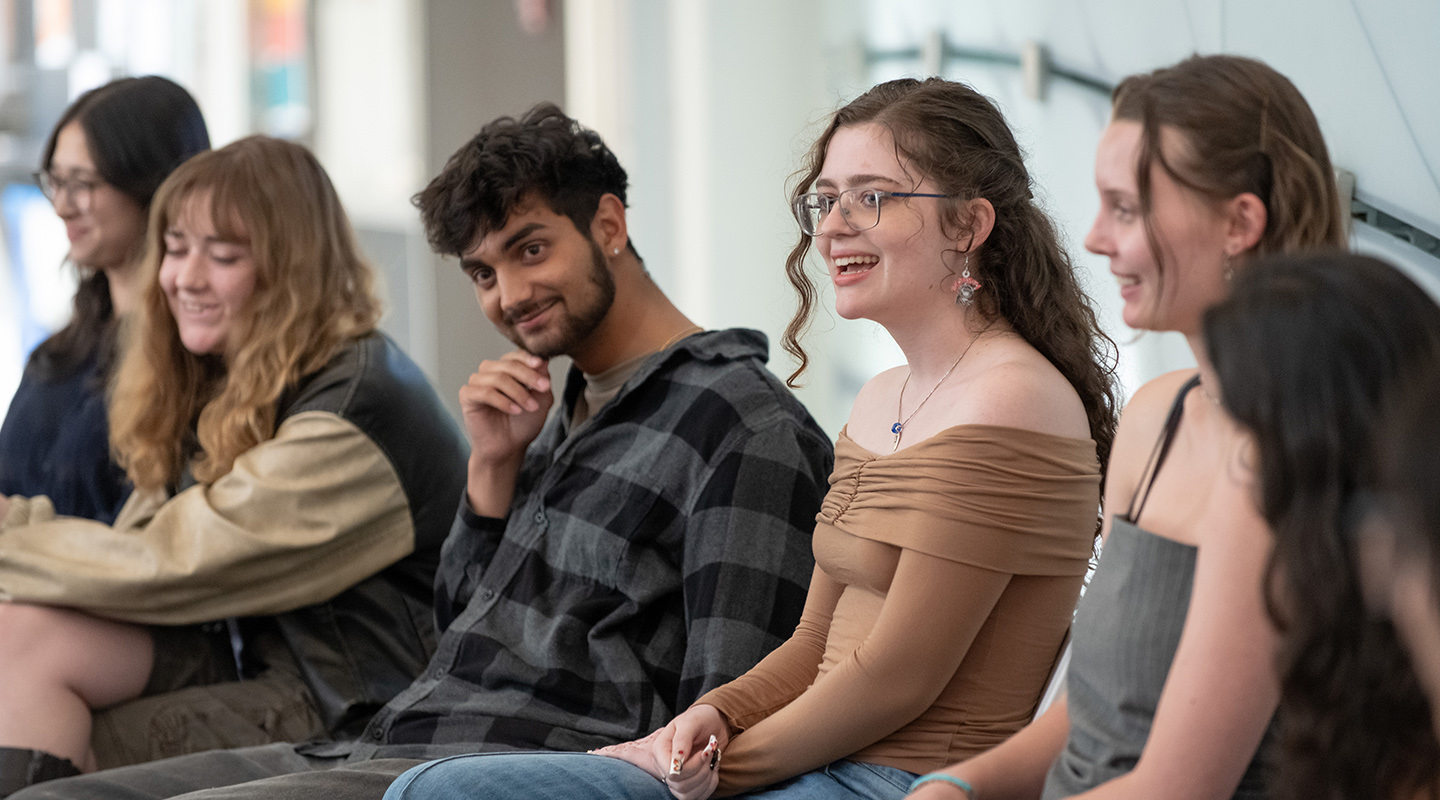
Be well-versed in current events. Dress professionally. Learn how spreadsheets work. These were among the practical tips shared by students from Occidental’s fall 2025 cohort of the Kahane U.N. Program as they advised incoming participants during a candid panel discussion about their semester working with United Nations agencies in New York City.
The panel was part of this year’s U.N. Week, hosted each spring by the Diplomacy and World Affairs Department. The week featured panels, a world art exhibition, a global dance night, and a keynote address from Monica Sharma, an international leadership expert and 20-year United Nations veteran, offering opportunities for the campus community to engage with global issues and hear directly from program participants.
Founded in 1986 by George Sherry, former U.N. assistant secretary-general for special political affairs, Oxy at the U.N. enables students to live in New York City for a semester while working directly with U.N. agencies. The program was renamed the Kahane U.N. Program in 2014 following a gift from real estate investor and adviser Bill Kahane ’70 and his wife, Elizabeth.
Mary Ellen Coaty ’26, a DWA major from Johnstown, Colo., assigned last fall to the UK Mission to the United Nations, said her placement aligned closely with her interests and skills. “There’s robust intern support because they’ve had so many Oxy interns,” she said. “I felt very fortunate to be trusted to be in negotiations.”
Eliza Bodden ’26, a DWA and critical theory and social justice double major from Steamboat Springs, Colo., who interned with the United Nations Development Programme (UNDP) in the HIV and Health Group, said she learned to take initiative in a fast-paced environment. “To be in New York at the epicenter of everything was an amazing opportunity,” she said. “It could also be uncomfortable because it’s very hierarchical. But it was really hopeful and inspiring to see people care so much about their work.”
Tejas Varma ’26, a DWA major from Brooklyn interning with the Digital Health and AI Team at UNDP, highlighted the opportunity to engage with emerging global issues. “Looking at ways to regulate AI within health and to spread the development equitably was amazing,” he said. “I also learned how people talk about it on a high-level stage.”
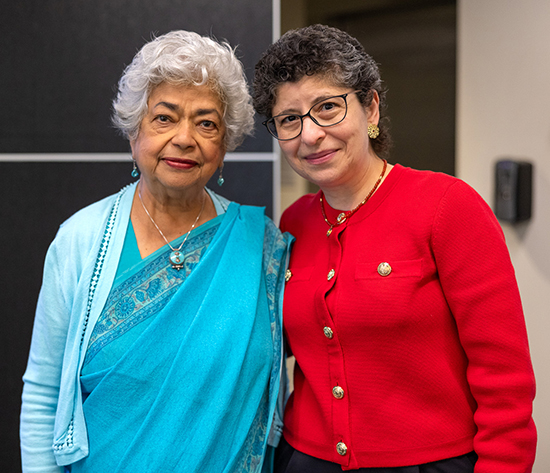
The Kahane U.N. Program enjoys strong reputation within the U.N. system, according to first-year program director Azza Karam, a 20-year U.N. veteran who joined the College last August. “Occidental has created a niche in the intern market of the U.N. that is unparalleled,” says Karam, who previously served as coordinator of the Arab Human Development Reports for the UNDP and founder and chair of the U.N. Inter-Agency Task Force on Religion. “They’ve built a reputation of excellence.”
Karam emphasizes the essential role interns play within the organization. “In all my years at the U.N., it was difficult to get things done because there was so much work—even before staff and budget cuts,” she says. “Interns can be a tipping point to enable the success of a program or not.”
She sees room to grow the program’s scale and visibility and to strengthen Occidental’s presence within the U.N. ecosystem, where Ivy League institutions often take priority. “We need to position Oxy more centrally and expand the knowledge of Occidental in the New York ecosphere.”
“There’s no other undergraduate program like this at any other school,” Karam says. “Students learn how to manage being professionals. It’s a full-time professional experience in a very complex international setting … and they grow up very quickly.”
The future of the United Nations itself was also a central theme throughout U.N. Week, as speakers addressed ongoing budget constraints, funding shortages, and shifting global political dynamics.
In her keynote address, “The U.N., People, and Our Responsibility Towards a Flourishing Future,” Sharma posed a question: “Do you think the U.N. will survive?” She answered with cautious optimism. “Sixty-three percent of adults in the United States feel that the U.N. makes a difference,” she said, citing a recent Pew Research Center study. “Two more reasons we will survive are resilience and the imagination to dream of alternatives.”
Sharma emphasized that the organization’s continued relevance depends on its ability not only to address human rights violations but also to help realize those rights in practice. She also encouraged students to examine their own roles in creating change. “If I am filled with hatred, I cannot manifest peace,” she said.
Karam echoes the idea that challenges facing the U.N. may even create additional opportunities for students. “They get to do more than they would have if they were working in a fully staffed space. Suddenly they’re sitting in meetings where interns wouldn’t normally be allowed.”
For those students lucky enough to be chosen for the program next fall, here’s one last piece of advice from last year’s cohort: Don’t buy too many groceries at once because you’ll have to lug them all home.
Top photo: A panel including Oxy seniors (l-r) Erica Greenberg, Ruby Gower, Tejas Varma, Arden Courtney Collins, and Chloe Peyton recounted their experiences last semester with the Kahane U.N. Program, now in its 40th year.