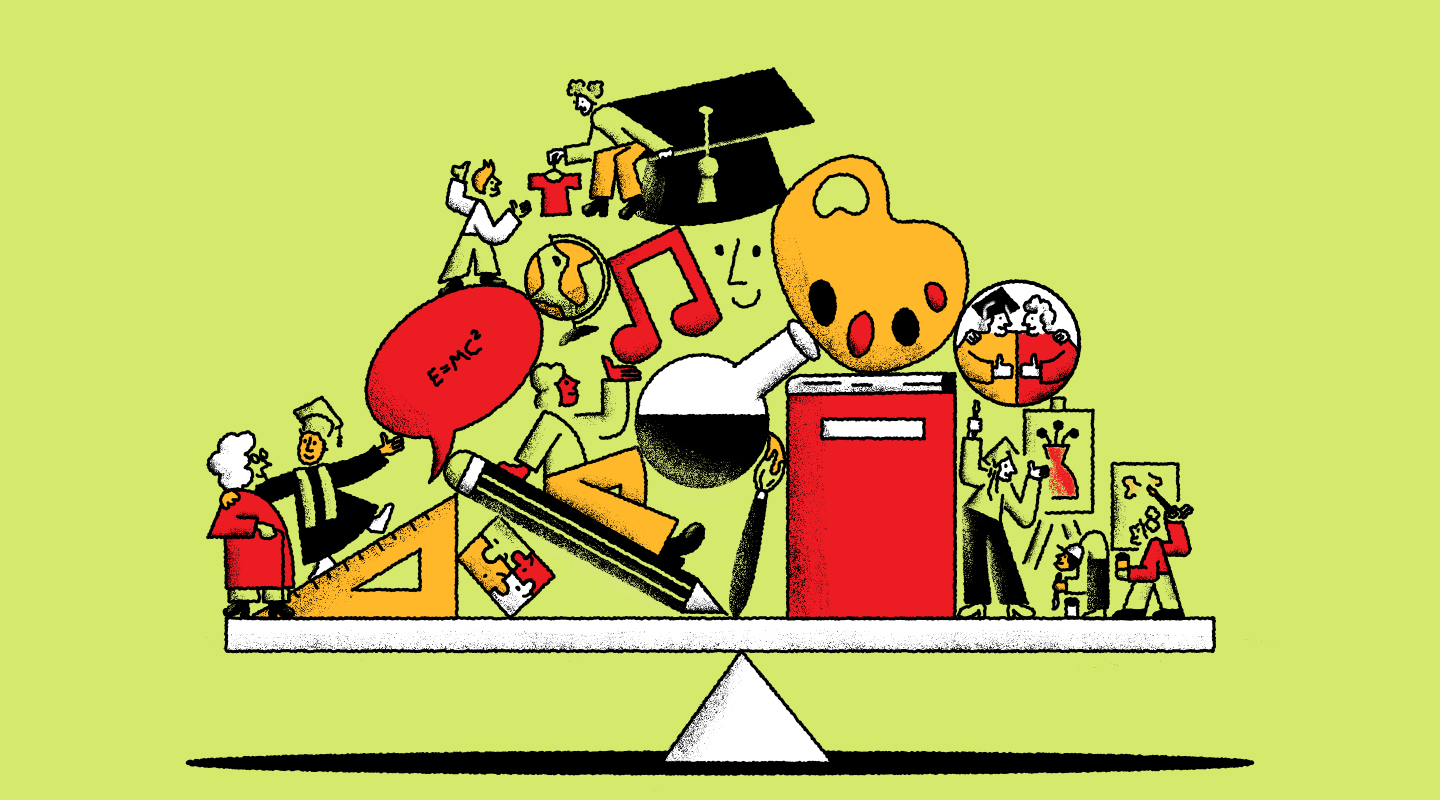
Working with faculty across the academic spectrum, Occidental’s Center for Community-Based Learning has become part of the institutional fabric
Growing up in Highland Park, “Occidental has always been part of my life,” Celestina Castillo says. Her mother participated in the College’s Upward Bound program in the 1970s, and in her five years (2003-08) of working at the nonprofit Los Angeles County Children’s Planning Council, Castillo collaborated with Occidental’s Center for Community-Based Learning (CCBL) on educational organizing efforts in Northeast Los Angeles.
Founded in November 2001 by a group of Oxy faculty and then-President Ted Mitchell, CCBL was designed to build long-term reciprocal partnerships with community organizations, with faculty embedding community engagement directly into the curriculum.
The program steadily grew under the leadership of founding director Maria Avila, and when the assistant director position at CCBL opened in 2009, colleagues encouraged Castillo to apply. Following Avila’s departure, Castillo served as director from 2013 to 2020, when she left Oxy to pursue a Ph.D. in gender studies at UCLA. She returned to Oxy as CCBL’s executive director in 2023.
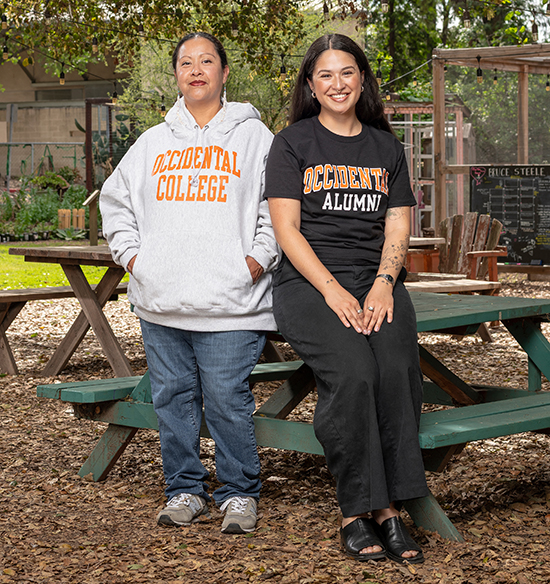
Kelsey Sablan Martin ’19 was raised in Beaverton, Ore., and graduated with a sociology degree from Oxy but jokes that she “majored in CCBL.” After completing her studies, Sablan Martin worked at Whitman College helping to build a community-engaged learning initiative. Drawing on her CHamoru identity and the Indigenous feminist framework she encountered at CCBL, she later completed a master’s degree in Indigenous education at the University of British Columbia. At the start of 2025, Sablan Martin reconnected with her mentor as CCBL’s assistant director. When she learned of the opening, returning to Oxy felt like a calling, she says: “I couldn't be prouder to be back in this office doing the work that we do.”
Community-based learning at Oxy does not follow a single template. When new faculty arrive, CCBL meets them where they are. The office helps identify potential partners, facilitates introductions, assists with budgeting and transportation logistics, and offers project support funding. Community partners receive honoraria for their time and expertise.
Central to many courses is the Education in Action (EIA) program. About 20 student facilitators each semester provide leadership and logistical coordination. In ARTS 100, the Arts Education Practicum, Oxy students teach art workshops to local youth at Oxy Arts. The course often includes partnerships with organizations like Heart of Los Angeles.
In POLS 253, Theorizing Membership and Migration, taught by Associate Professor of Politics
Economics Professor Bevin Ashenmiller’s Sustainability Lab (ECON 201) offers another model. Students operate a campus thrift store, Touchdown Thrift, learning firsthand about sustainable business practices. The course draws on partnerships with organizations such as Remainders Creative Reuse in Pasadena and Suay, a textile recycling leader.
For years, much of CCBL’s labor remained invisible. That has begun to change, however, as community-based learning has become increasingly central to the College’s identity. Sablan Martin has noticed the shift, especially compared to other institutions. “If a new faculty member comes in now, they know this is part of the norm,” she says. Policies supporting tenure and promotion make it possible to integrate community engagement deeply into academic life.
That institutional commitment has paid dividends. Occidental first earned the Carnegie Foundation for the Advancement of Teaching’s Carnegie elective classification for community engagement in 2008 and was reclassified most recently in January. Since the 2015 review, the number of community-engaged courses and participating students has more than doubled.
As CCBL observes its 25th anniversary this year, the office is planning alumni gatherings and celebratory events. The guest list could get crowded: Hundreds of students have participated directly through EIA roles, and many more through coursework. “There have been bumps along the way,” Castillo says, “but I think CCBL has gotten deeper into the culture of the institution.”