
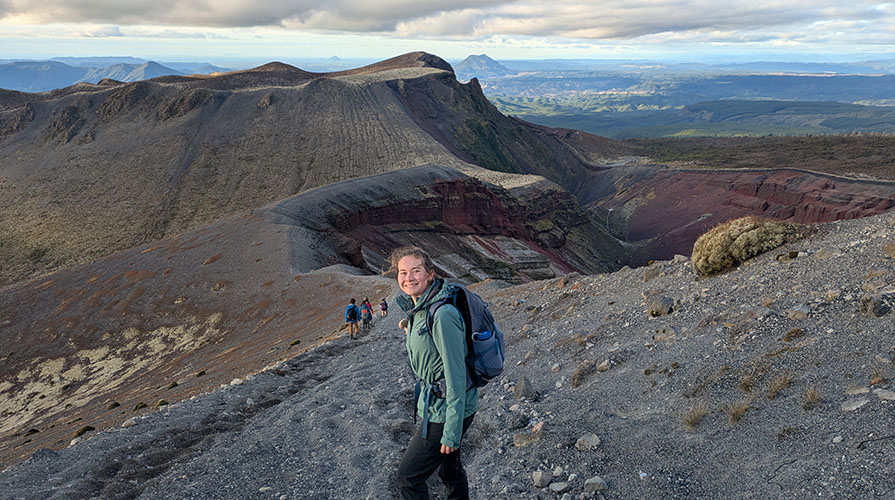
For geology major Maggie Hill ’28, the Richter Faculty-Led Research Abroad program offered the chance to take an ongoing research project on campus to the volcanic landscapes of New Zealand. There, she discovered how fieldwork, collaboration, and cultural exchange can transform scientific research.
What inspired you to apply for a Richter faculty-led research project abroad?
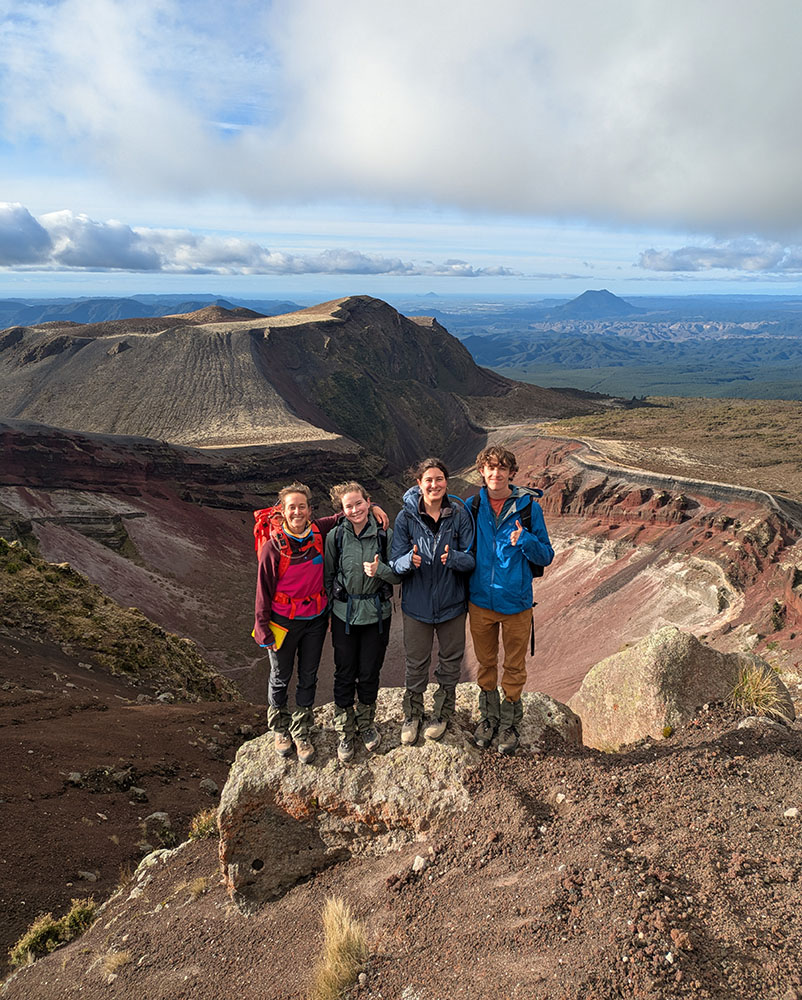
As a declared geology major, I joined Prof. Lydia Harmon’s research group at the end of my first year. She studies igneous petrology, and most of her research focuses on the Taupo Volcanic Zone in New Zealand. I began working on a project focused around a particular site in New Zealand, so when the Richter Program presented an opportunity to travel to this site I applied with encouragement from Prof. Harmon. For two weeks in late May, I traveled around the North Island of New Zealand, along with classmates Mae Stone ’27 and Caden Reynolds ’29, led by Prof. Harmon, collecting field samples to be analyzed back in the United States. Additionally, we met up with Prof. Sarah Smithies from the University of Canterbury and two of her graduate students, who all conduct research within the Taupo Volcanic Zone.
Can you describe a moment during your research experience that changed how you think about your field of study?
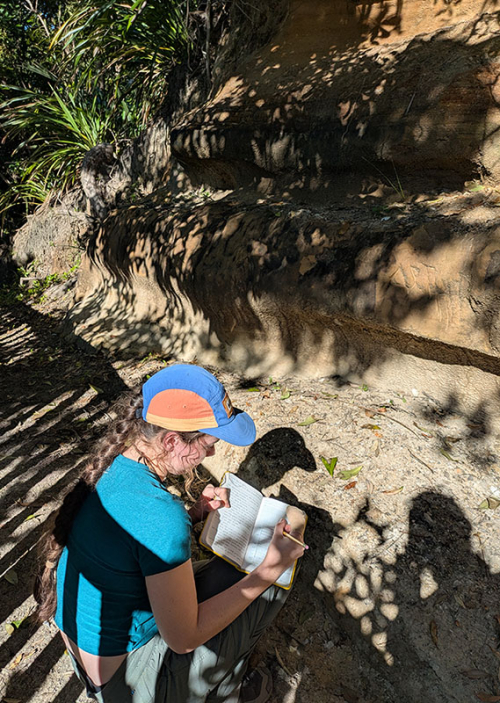
Throughout the fall and spring semesters leading up to this trip, I spent time analyzing samples from the Whakamaru base eruption site off Highway 5 in New Zealand, currently believed to represent the base layer of the region's most recent supereruption. While our original plan didn't call for revisiting this outcrop, trends in our accumulated data began to emerge that made us question our original approach. Once in New Zealand we changed course, drove south on Highway 5, and pulled over at a rain-soaked roadside exposure. Before we could get to work, all seven of us crowded into our small minivan, eating chicken chips and poring over data while we waited out the rain.
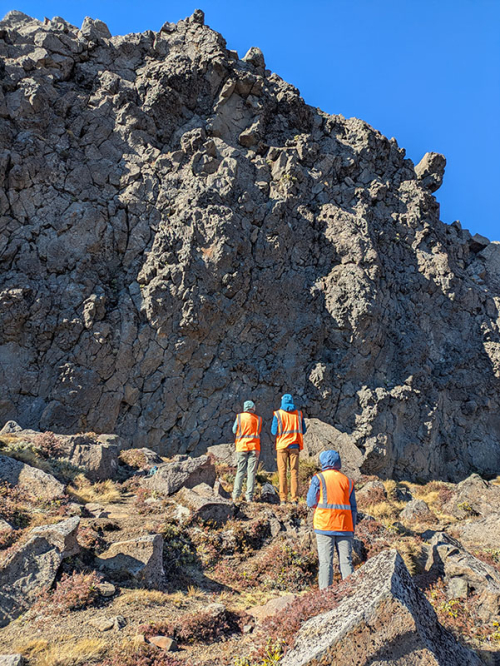
When the clouds finally cleared, we climbed, sampled, and investigated the outcrop together, working with the focus and efficiency of a seasoned team. Having seven people's eyes on the problem allowed Prof. Harmon and me to notice things we would have otherwise missed. These collective observations will no doubt prove invaluable as my project develops. Those few hours in the gloomy morning weather provided a perspective on research that lab work alone never could, most strikingly, how essential collaboration is to good science, especially when people bring genuinely different perspectives and backgrounds to the same problem.
How did engaging with the local community or culture shape your research and personal experience abroad?
On our last full day in New Zealand, we hiked Mount Tarawera, the volcano behind New Zealand’s most recent major eruption, in 1886. This eruption devastated the local Māori population; because of the cultural importance of this volcano to the Māori, it is only permissible to hike it with Māori guides. Our tour was in the late afternoon, and after an exhilarating off-roading trip to get to the base of the volcano we set off for a two-hour excursion to the top and back. During the hike, our guides shared their knowledge of the volcano and what it means to them culturally, while we described the geological features of the volcano. These exchanges were a true highlight of the trip.
[I gained perspective on] how essential collaboration is to good science, especially when people bring genuinely different perspectives and backgrounds to the same problem.
How has participating in a Richter research project abroad influenced your academic goals, career plans, or future ambitions?
Coming into this trip, I already had experience in Prof. Harmon's igneous petrology lab, where we analyze erupted material, primarily pumice, to reconstruct the storage conditions of magma prior to eruption. In the field, I was introduced to physical volcanology: examining deposits to distinguish between eruptions, interpreting eruption dynamics, and understanding how volcanic events leave deposits in the landscape. We also met with geologists responsible for monitoring New Zealand's active volcanic hazards, and heard Māori accounts of the 1886 Tarawera eruption firsthand.
These experiences reshaped how I think about my future in the field. I had come in with an understanding and knowledge of petrology, but the combination of fieldwork, professional conversations, and the human dimension of volcanic hazard showed me how much I'm drawn to physical volcanology as well. Going forward, I plan to seek out opportunities such as graduate programs, research positions, or both that let me work at the intersection of petrology and physical volcanology.
All photos courtesy of Maggie Hill.